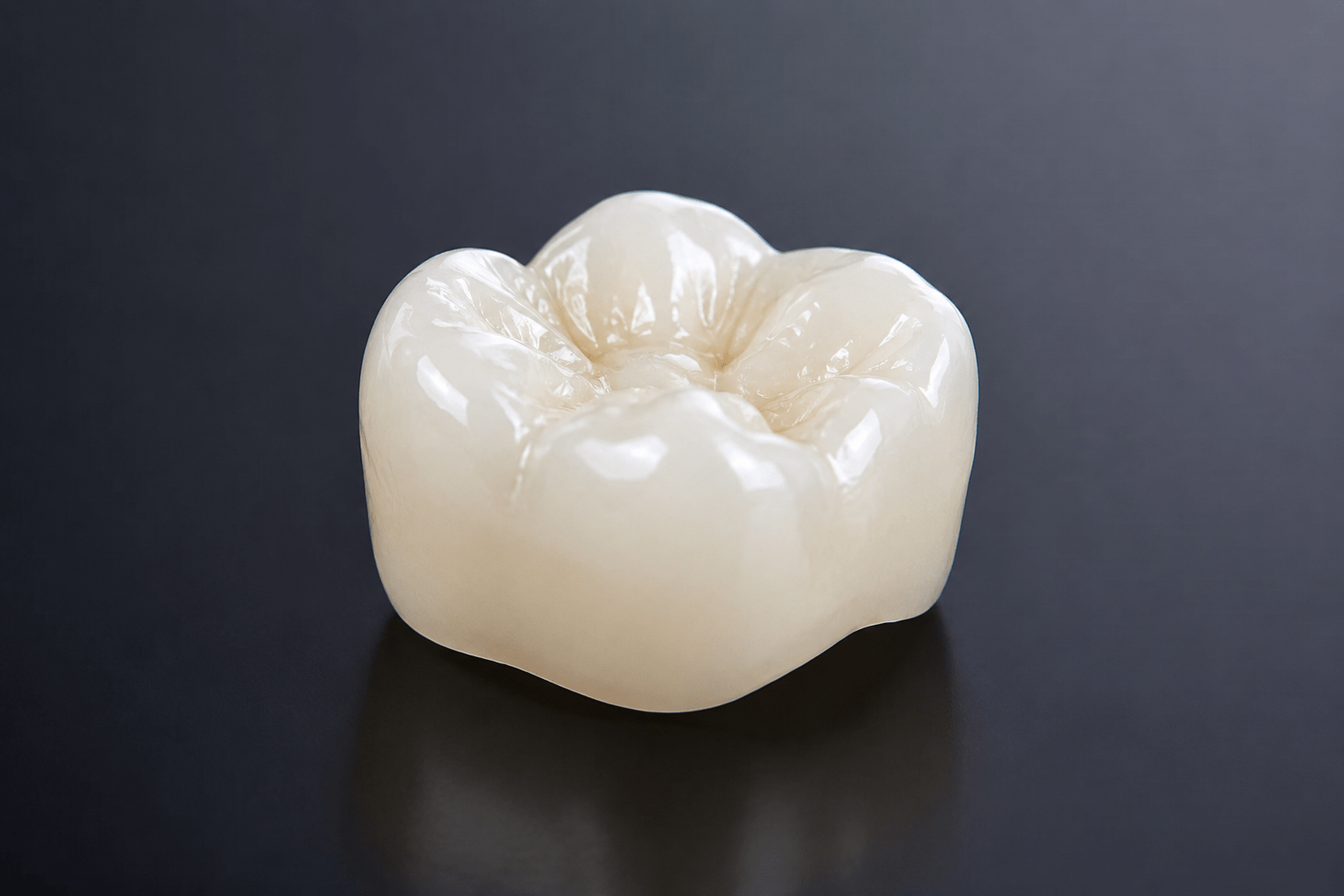
Recommended for back teeth
Zirconia Crown
- Strongest ceramic material available
- Completely metal-free
- Exceptional long-term durability
- Beautiful, natural-looking finish

Restorative Dentistry · East Dulwich
Restore damaged or missing teeth with beautiful, strong and natural-looking restorations — hand-crafted zirconia and E.max ceramics, fitted with meticulous precision.
Section 01
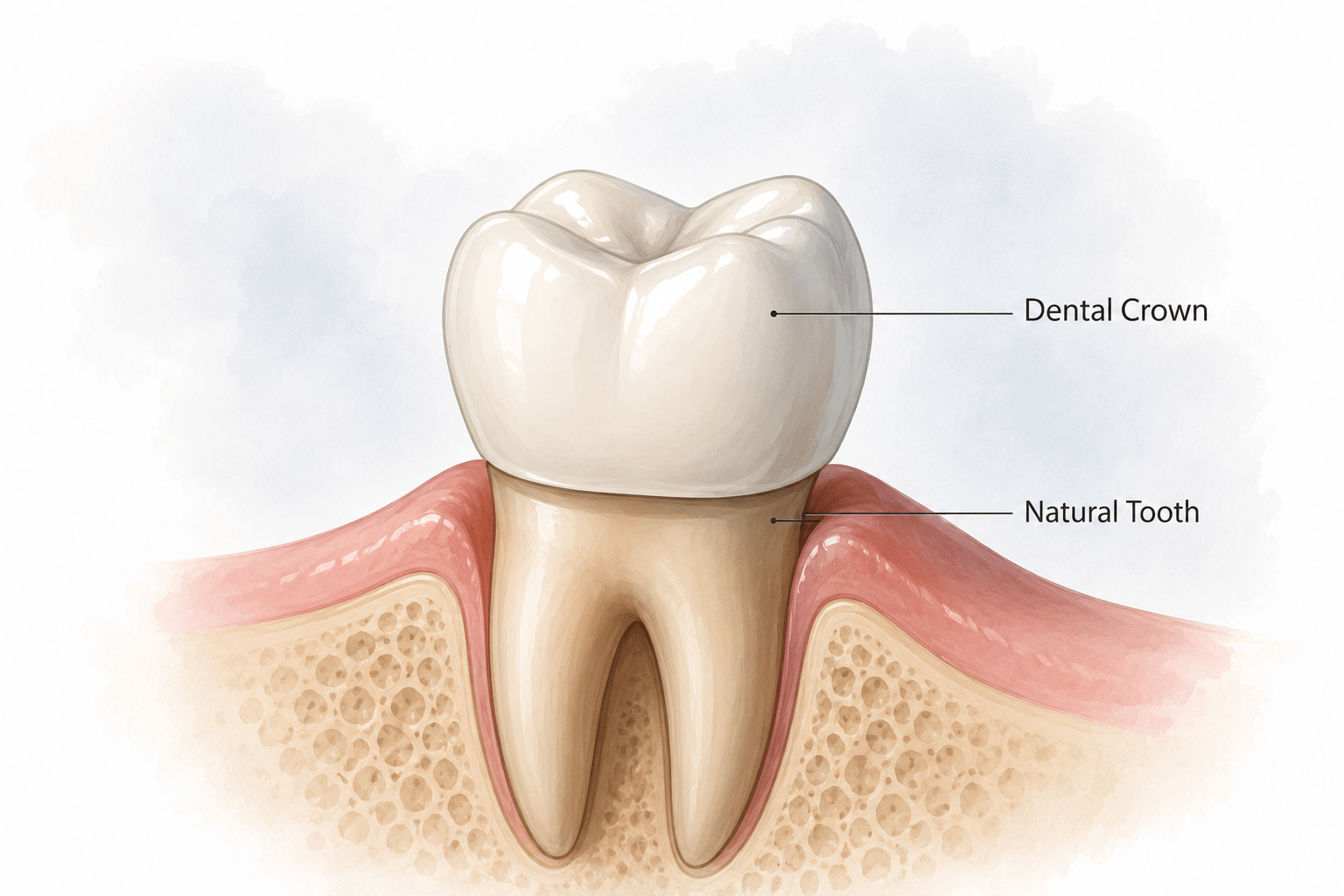
A dental crown is a custom-made protective cap that completely covers a damaged tooth. Once bonded in place it works exactly like a natural tooth — restoring strength, appearance and function in a single beautiful restoration.
Section 02
A crown is recommended whenever a tooth is too damaged to be reliably restored with a filling alone.
When a large filling leaves too little natural tooth to withstand chewing forces.
A crown holds a cracked tooth together and prevents the crack from spreading deeper.
Rebuilds a broken or chipped tooth back to full shape, strength and appearance.
Restores height and function on teeth worn down by grinding or acid erosion.
Root canal treated teeth are more brittle. A crown after root canal treatment significantly reduces the risk of the tooth fracturing.
Improves the shape, size or colour of a tooth that lets down your smile.
Section 03
We use only premium materials, hand-crafted by trusted UK dental laboratories. The right material depends on the tooth being restored.
Recommended for back teeth
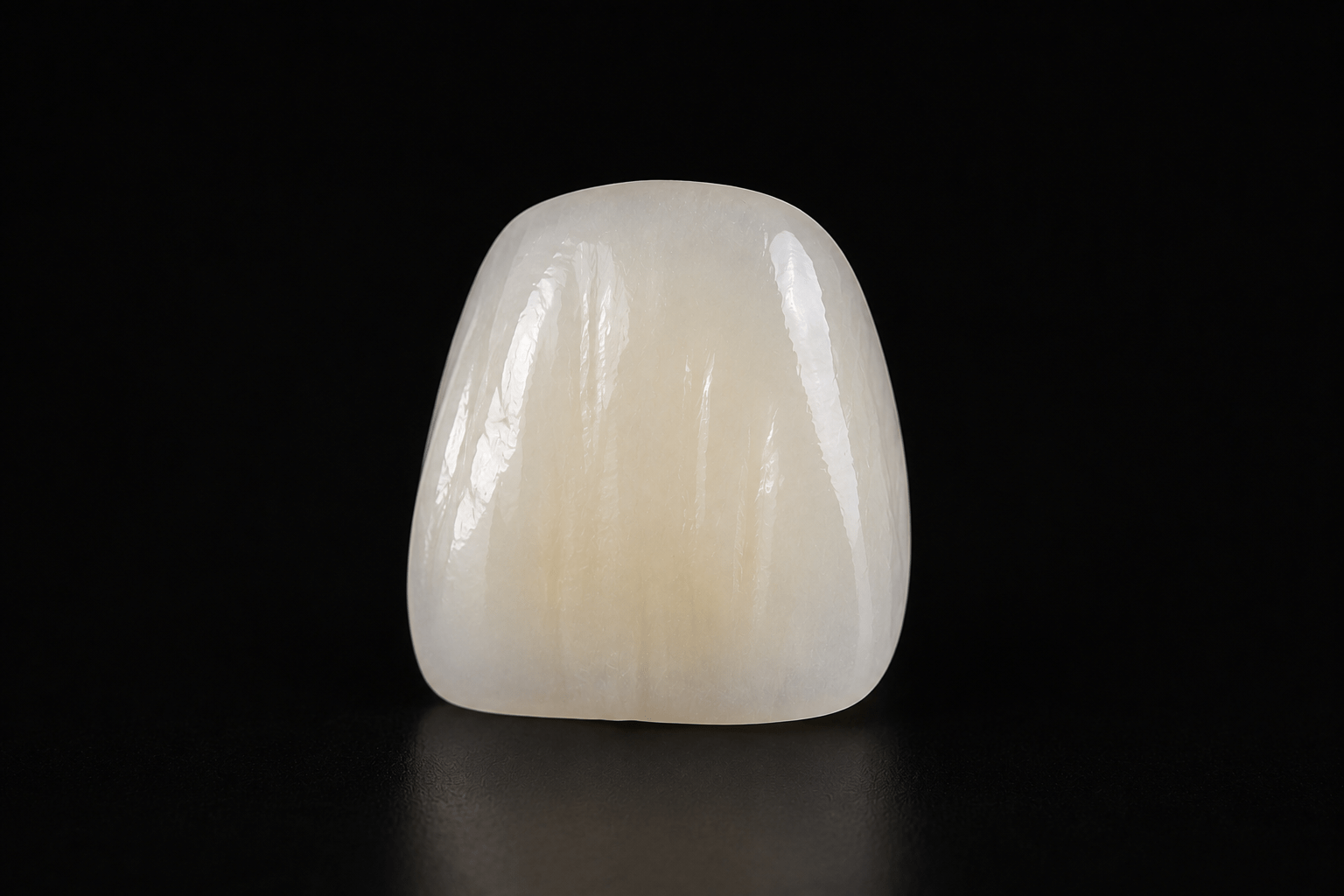
Ideal for front teeth
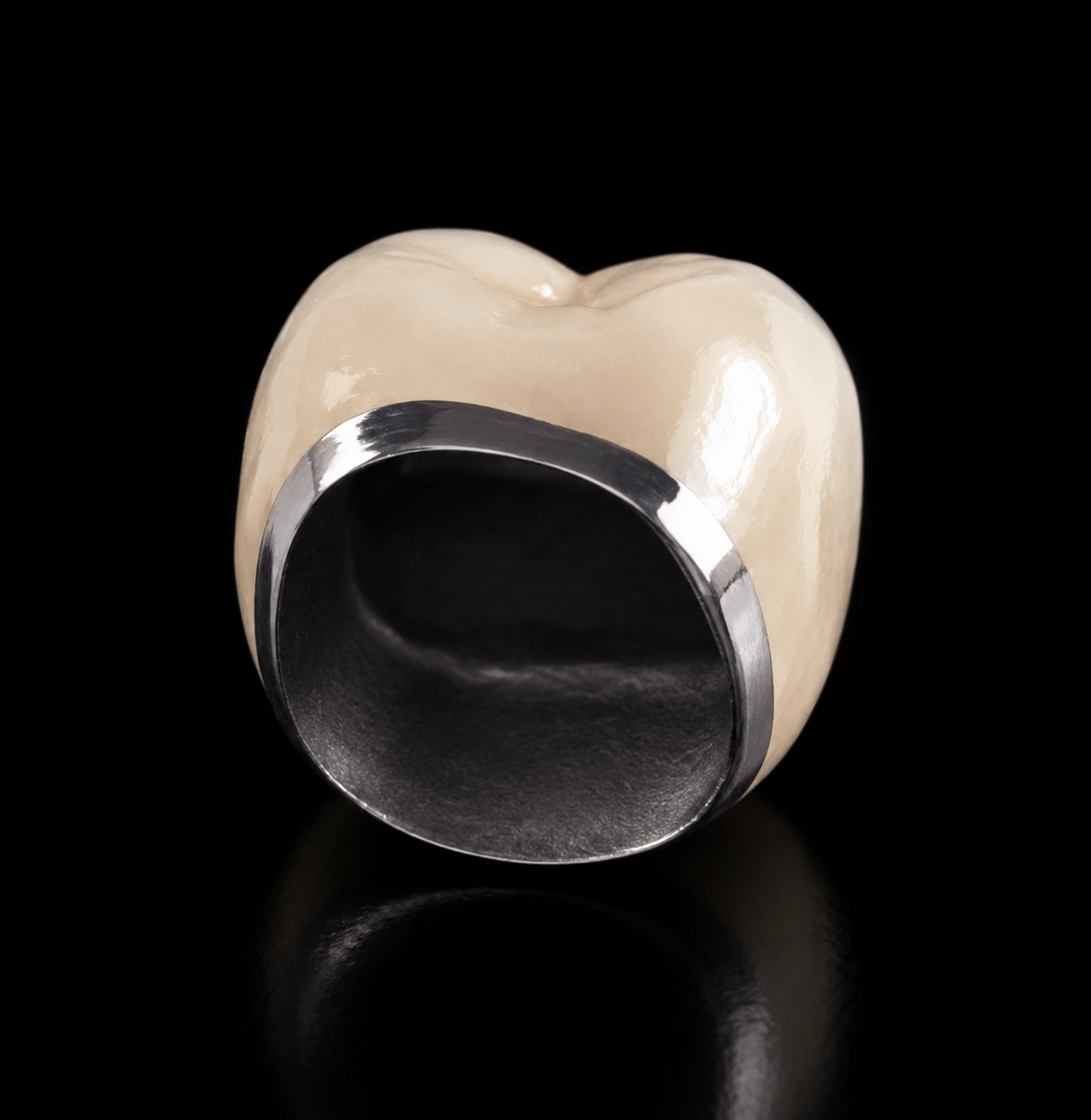
Traditional option
A porcelain outer layer bonded to a metal substructure. Durable and long-established, but a subtle grey margin can appear at the gum line over time — which is why we now prefer all-ceramic materials for most cases.
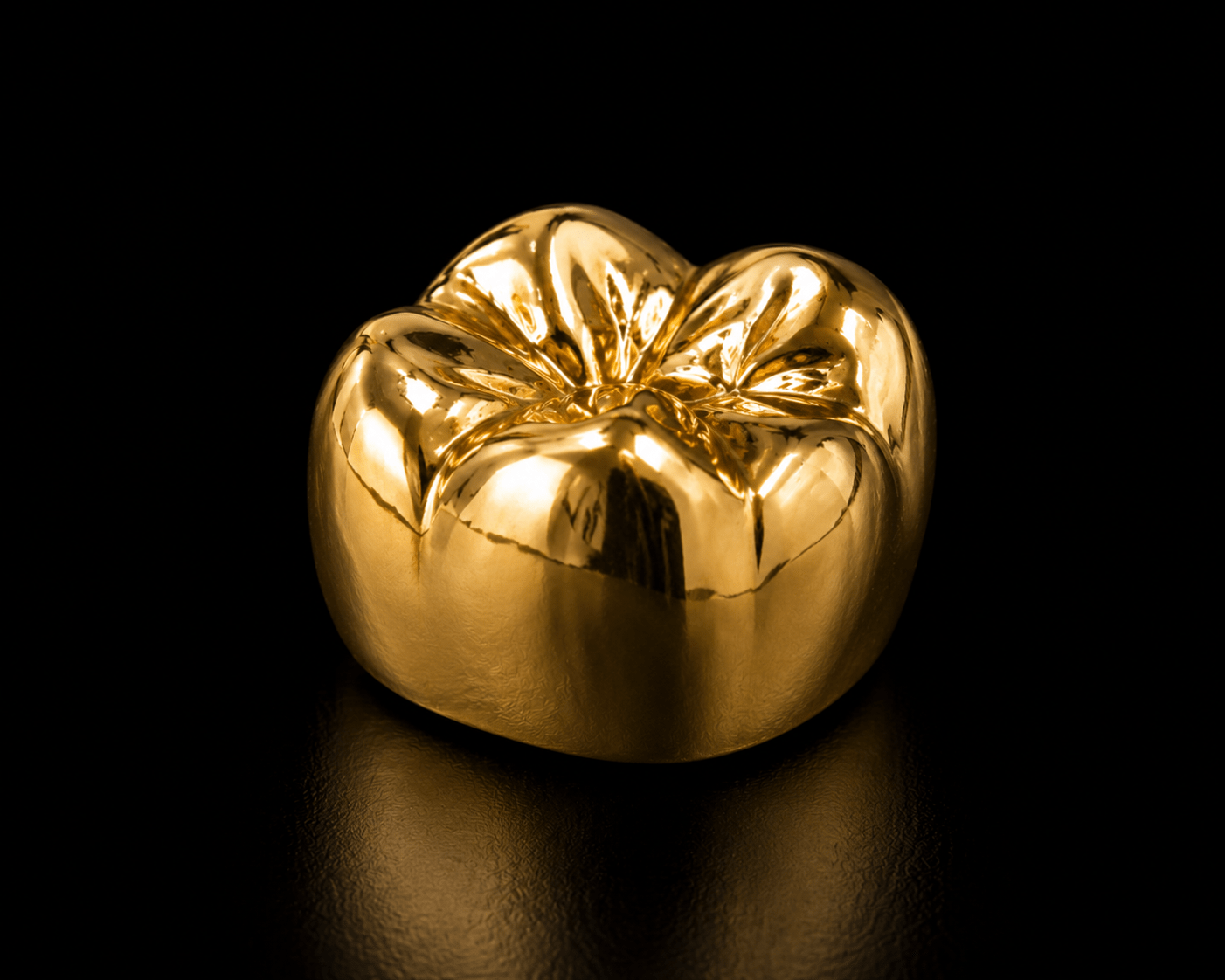
Extremely durable
Gold crowns are exceptionally strong and gentle on opposing teeth. Rarely used on visible teeth today, but still an excellent choice for hidden back molars in selected cases.
Section 04
Every crown is planned and fitted with precision — usually across two comfortable appointments.
A thorough clinical examination, digital X-rays where needed, and a fully explained treatment plan tailored to your tooth and your smile.
Under gentle local anaesthetic, the damaged tooth is carefully shaped to create the ideal foundation for the new crown.
A high-precision intraoral scanner captures your teeth in seconds — no messy traditional impressions in most cases.
A comfortable temporary crown protects the prepared tooth and lets you eat and smile normally while the final crown is made.
A skilled UK-based ceramist hand-crafts your final crown, matching shape, shade and translucency to your natural teeth.
We check fit, colour and bite in fine detail, then bond your new crown permanently in place.
Section 05
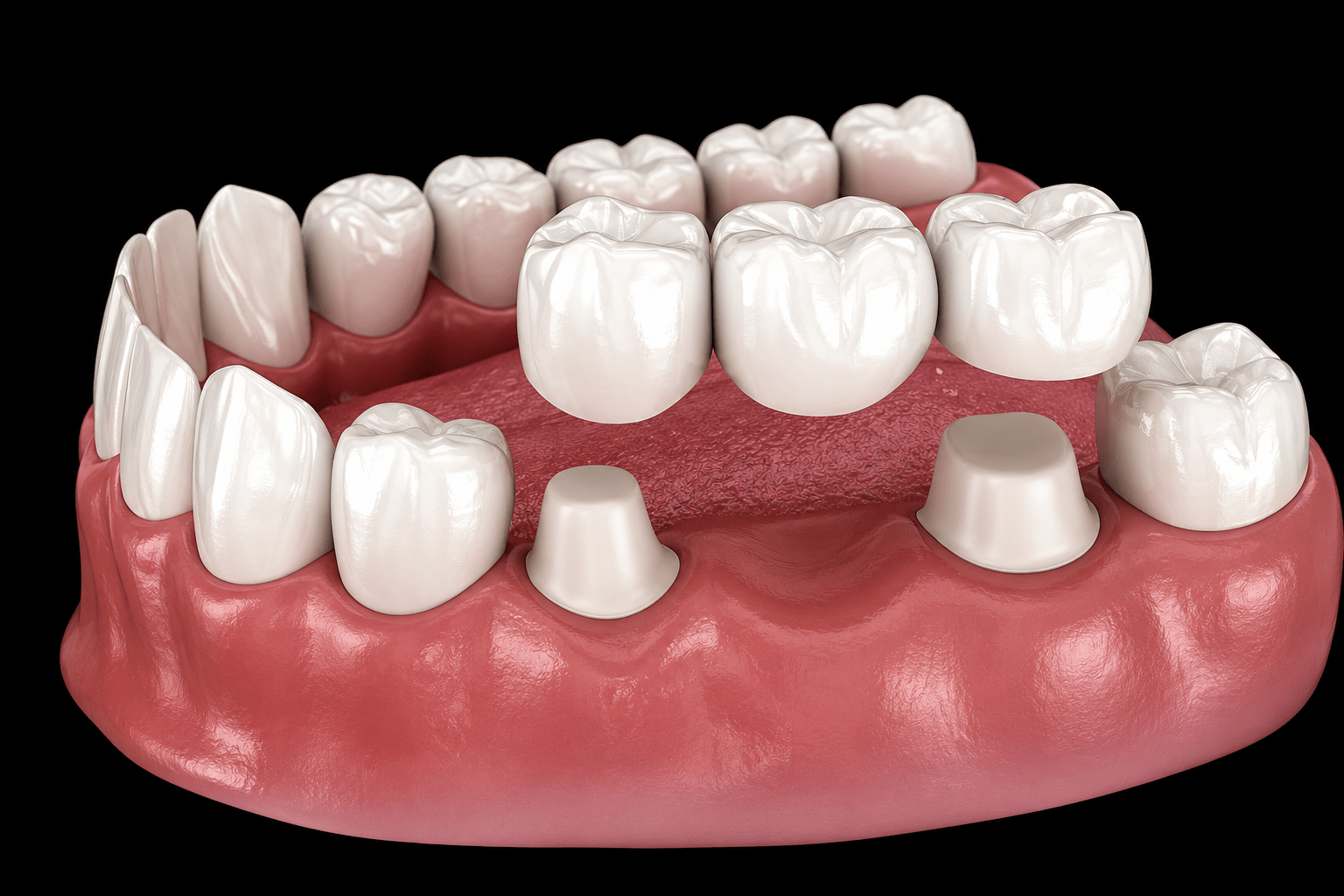
A dental bridge is a fixed restoration that literally bridges the space left by a missing tooth. The two teeth on either side of the gap are prepared like crowns, and a false tooth — called a pontic — is joined between them.
Once cemented, a bridge is fixed in the mouth. It cannot be taken out, and it looks and functions like natural teeth.
Section 06
Both are excellent treatments. Here is our honest, professional view.
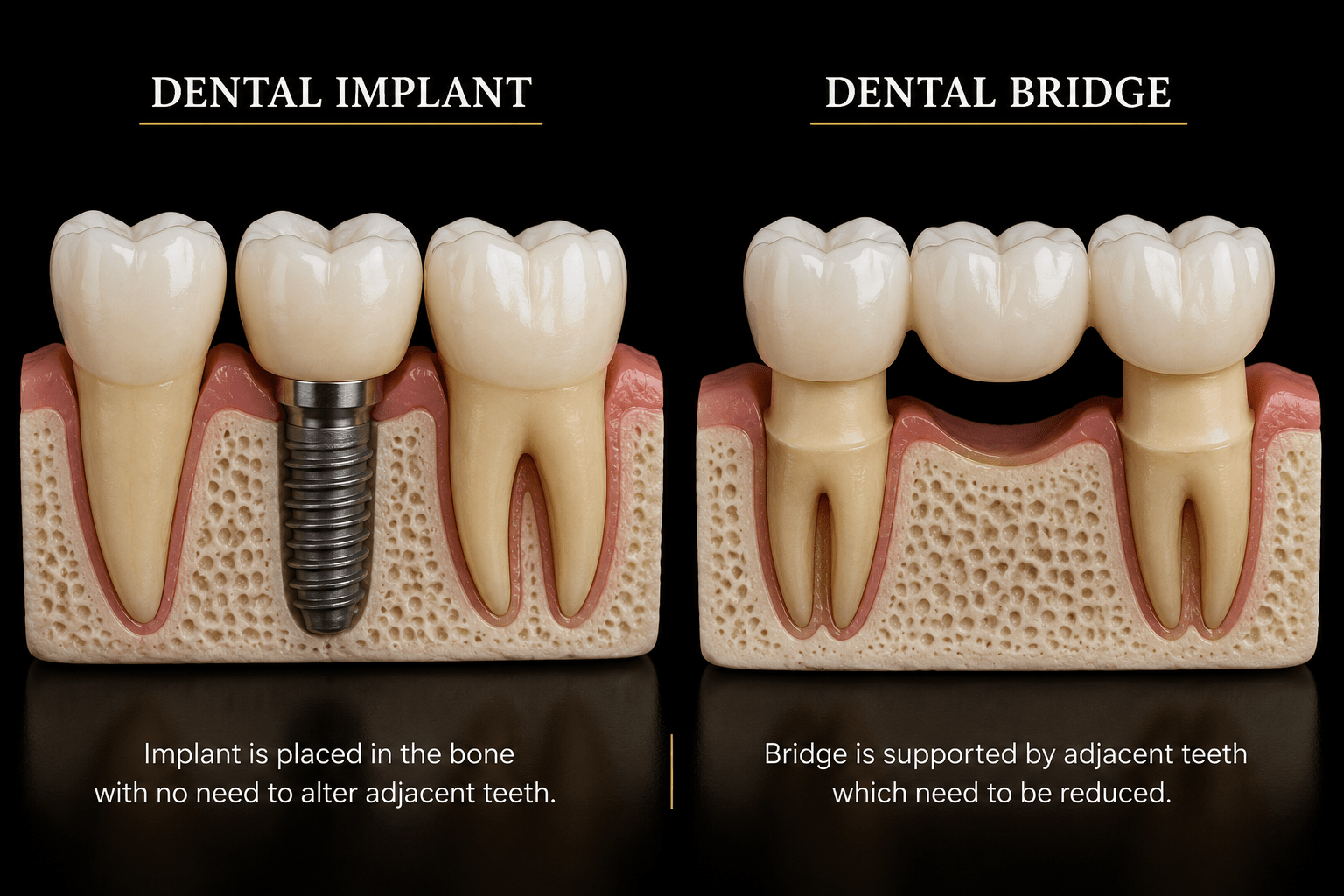
Whenever it is clinically possible, we generally recommend a dental implant for replacing a single missing tooth. This is because:
That said, bridges remain a beautiful, fast and highly effective option — and in some cases they are the right choice. We will always talk you through both.
Every patient is different. Your consultation will identify the right option for your mouth, your budget and your lifestyle.
Section 07
Beautiful ceramics last longer when they are cared for. A simple daily routine and regular professional cleaning is all it takes.
With good home care and regular hygiene visits, your crowns and bridges will stay strong, healthy and beautiful for many years to come.

FAQ
A well-made ceramic crown typically lasts 10 to 15 years or more with good oral hygiene, regular check-ups and hygienist visits. Many of our crowns last considerably longer.
No. The tooth is fully numbed with local anaesthetic, so the procedure itself is comfortable. Some patients experience mild sensitivity for a few days afterwards, which quickly settles.
It depends on the tooth. Zirconia is our first choice for back teeth because of its outstanding strength. E.max is ideal for front teeth thanks to its natural translucency. We recommend the right material at your consultation.
A traditional bridge generally lasts 10 to 15 years. Longevity depends heavily on the health of the supporting teeth and how well the bridge is cleaned.
In most cases, yes. An implant replaces the missing tooth without touching the neighbouring teeth, is easier to clean, and preserves the underlying jaw bone. A bridge is still an excellent option when implants are not suitable.
Yes. Once the final crown is cemented you can eat normally. We simply advise avoiding very hard foods to protect the restoration long term.
Brush twice a day and use interdental brushes or floss threaders to clean underneath the pontic. Regular hygienist visits are essential.
Root canal treated teeth are more brittle and prone to fracture. A crown protects the tooth by covering it completely and significantly reduces the risk of it breaking.
Talk with Dr Ali and the team about the best restoration for your smile. We will explain every option honestly — with no pressure.