
Cosmetic Dentistry · East Dulwich
Dental Veneers in East Dulwich
Transform your smile with beautifully crafted porcelain veneers designed to enhance the
colour, shape and appearance of your teeth — while maintaining a natural, elegant smile.
What are dental veneers?
Ultra-thin porcelain shells for a naturally beautiful smile
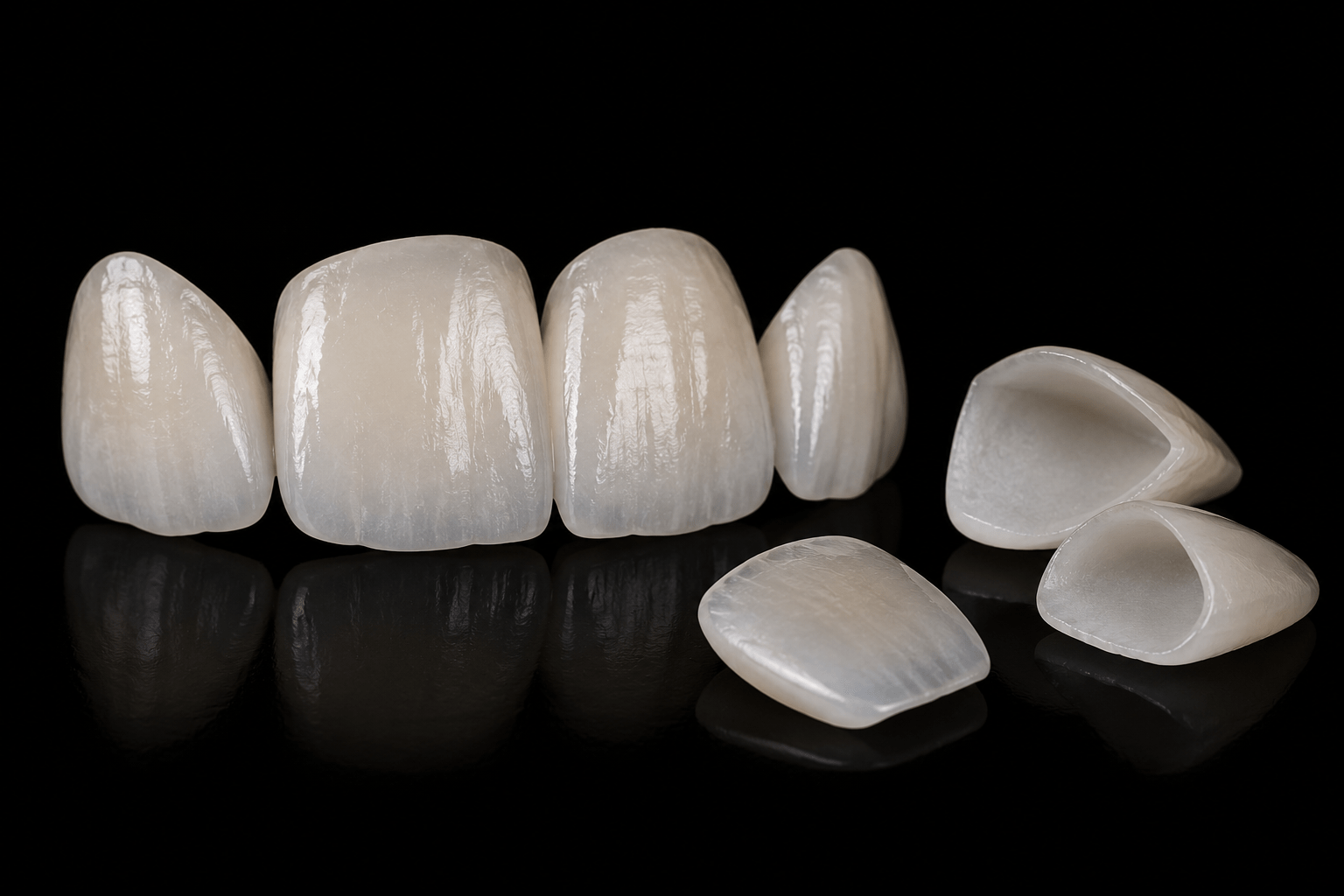
Dental veneers are ultra-thin porcelain shells that are permanently bonded to the front
surface of your teeth to improve their appearance. Each veneer is individually designed
to create a natural-looking smile while preserving as much healthy tooth structure as
possible.
Veneers can be used to improve:
- ✓ Tooth colour and brightness
- ✓ Tooth shape and proportions
- ✓ Small gaps between teeth
- ✓ Chipped or worn teeth
- ✓ Uneven or irregular teeth
- ✓ Minor alignment issues
Veneers are one of the most popular treatments for a
smile makeover
and are often used alongside
professional hygiene
for the best cosmetic result.

The veneer process
How are dental veneers made?
Every veneer is custom-made to match the character and proportion of your own smile.
- 1 Consultation and smile assessment
- 2 Digital photographs and smile design
- 3 Minimal tooth preparation (when required)
- 4 Digital scan or precise impression
- 5 Veneers individually handmade by a dental laboratory
- 6 Temporary veneers provided where appropriate
- 7 Final fitting, checking and polishing
Because every veneer is handcrafted, we can match colour, translucency and shape to your
surrounding teeth — creating a result that looks completely natural.
Modern adhesive dentistry
How are veneers bonded to your teeth?
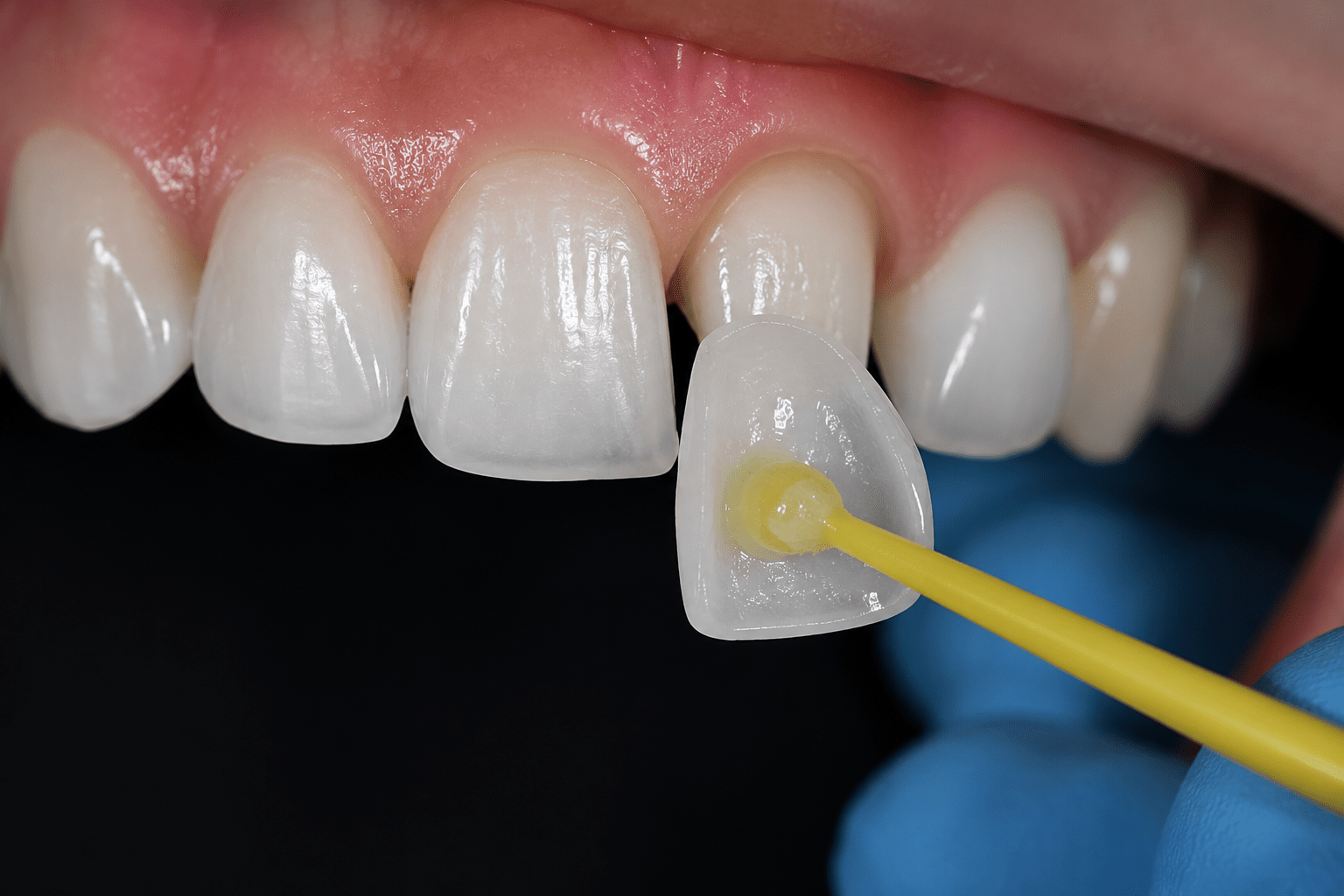
Before the veneer is fitted, both the tooth and the porcelain veneer are carefully
prepared using modern adhesive techniques. A special dental bonding cement is then
applied, allowing the veneer to be permanently bonded to the tooth surface.
The fit, colour and bite are carefully checked before the veneer is polished to create a
smooth, natural finish. Thanks to modern adhesive dentistry, veneers form an extremely
strong and durable bond when properly cared for — often lasting many years.
Any minor chips or wear elsewhere in your smile can also be corrected using
composite fillings
during the same treatment plan.
Compare treatments
Composite bonding vs porcelain veneers
Both treatments transform your smile — but they suit different situations.
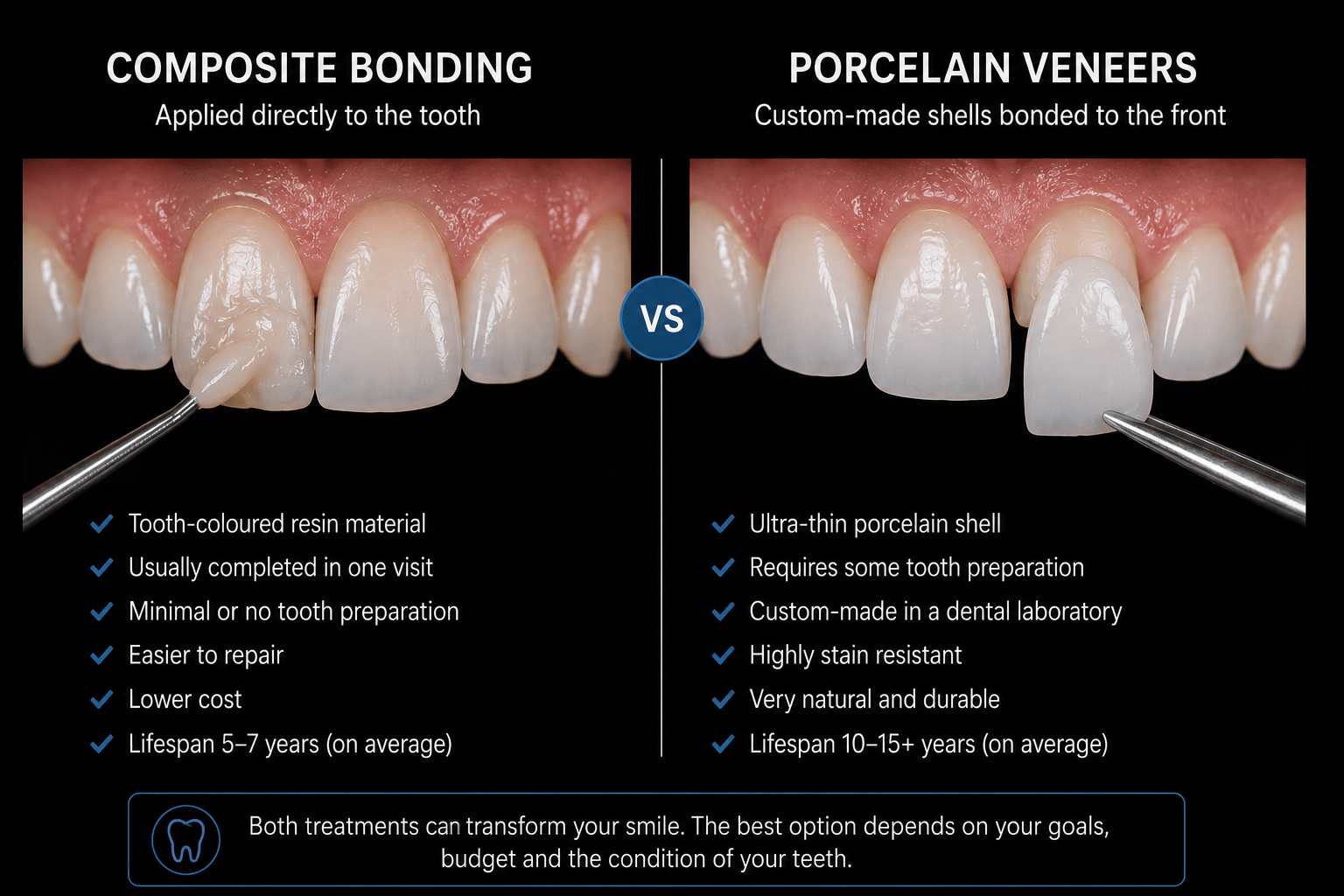
Composite bonding uses a tooth-coloured resin material that is shaped directly onto your
tooth, usually in a single appointment. Porcelain veneers are ultra-thin shells hand-crafted
in a dental laboratory and bonded to the front of your teeth for a highly aesthetic,
long-lasting result.
- ✓ Usually completed in one appointment
- ✓ Less expensive
- ✓ Minimal or no tooth preparation
- ✓ Easier to repair if chipped
- ✓ May stain gradually over time
- ✓ Handmade by a dental laboratory
- ✓ Excellent colour stability
- ✓ Highly stain resistant
- ✓ Extremely aesthetic and natural
- ✓ Longer lasting — often 10–15+ years
- ✓ Preferred for larger smile makeovers
The most suitable treatment depends on your smile, your goals and your clinical situation —
which we discuss carefully during your consultation.
Aftercare
Looking after your veneers
Good oral hygiene will help your veneers stay beautiful for many years.
- 1
Brush twice daily
Use a soft-bristle brush and a non-abrasive toothpaste.
- 2
Floss every day
Clean gently around the edges of each veneer.
- 3
Regular check-ups
Attend routine dental check-ups to keep everything healthy.
- 4
Visit the hygienist
Professional hygiene visits help maintain gum health and polish.
- 5
Avoid biting hard objects
Don’t bite pens, nails or ice — porcelain is strong but not indestructible.
- 6
Wear a night guard
If you grind your teeth, a protective night guard will extend the life of your veneers.
FAQs
Frequently asked questions about veneers
What are dental veneers?
Dental veneers are ultra-thin porcelain shells bonded to the front of your teeth to
improve their colour, shape and overall appearance.
Do veneers damage natural teeth?
Modern veneers are designed to be minimally invasive. Only a very small amount of
enamel is removed — and in some cases, none at all — to allow the veneer to sit naturally
on the tooth.
Are veneers painful?
No. The procedure is carried out under local anaesthetic when needed, and most patients
feel no discomfort during or after treatment.
How long do porcelain veneers last?
With good oral hygiene and regular check-ups, porcelain veneers typically last
10–15 years or longer.
Can veneers stain?
Porcelain veneers are highly stain resistant. Composite bonding, by contrast, can stain
gradually over time.
Can I whiten veneers?
Veneers cannot be whitened. If you are considering
whitening,
we recommend doing this before your veneers are made so they can be colour-matched to
your desired shade.
Can veneers be repaired?
Small chips can sometimes be repaired, but a damaged porcelain veneer will often need
to be replaced.
How many veneers do I need?
This depends on your smile. Some patients only need 2 veneers; others choose 6, 8 or 10
for a full smile makeover. We’ll advise during your consultation.
Are veneers better than composite bonding?
Neither treatment is universally “better” — they suit different needs. Composite
bonding is faster and less expensive; porcelain veneers are more aesthetic and
longer-lasting.
How do I care for my veneers?
Brush and floss daily, avoid biting hard objects, attend regular check-ups and hygiene
appointments, and wear a night guard if you grind your teeth.
Can veneers fall off?
It is very rare with modern adhesive dentistry. Should a veneer ever debond, it can
usually be re-bonded quickly.
Am I suitable for veneers?
Most patients with healthy teeth and gums are suitable. A consultation allows us to
assess your smile and recommend the ideal treatment plan — which may include
crowns & bridges
alongside veneers.
Book your consultation
Ready to transform your smile?
Speak to our team about porcelain veneers in East Dulwich. We’ll design a smile that looks and feels completely natural.