
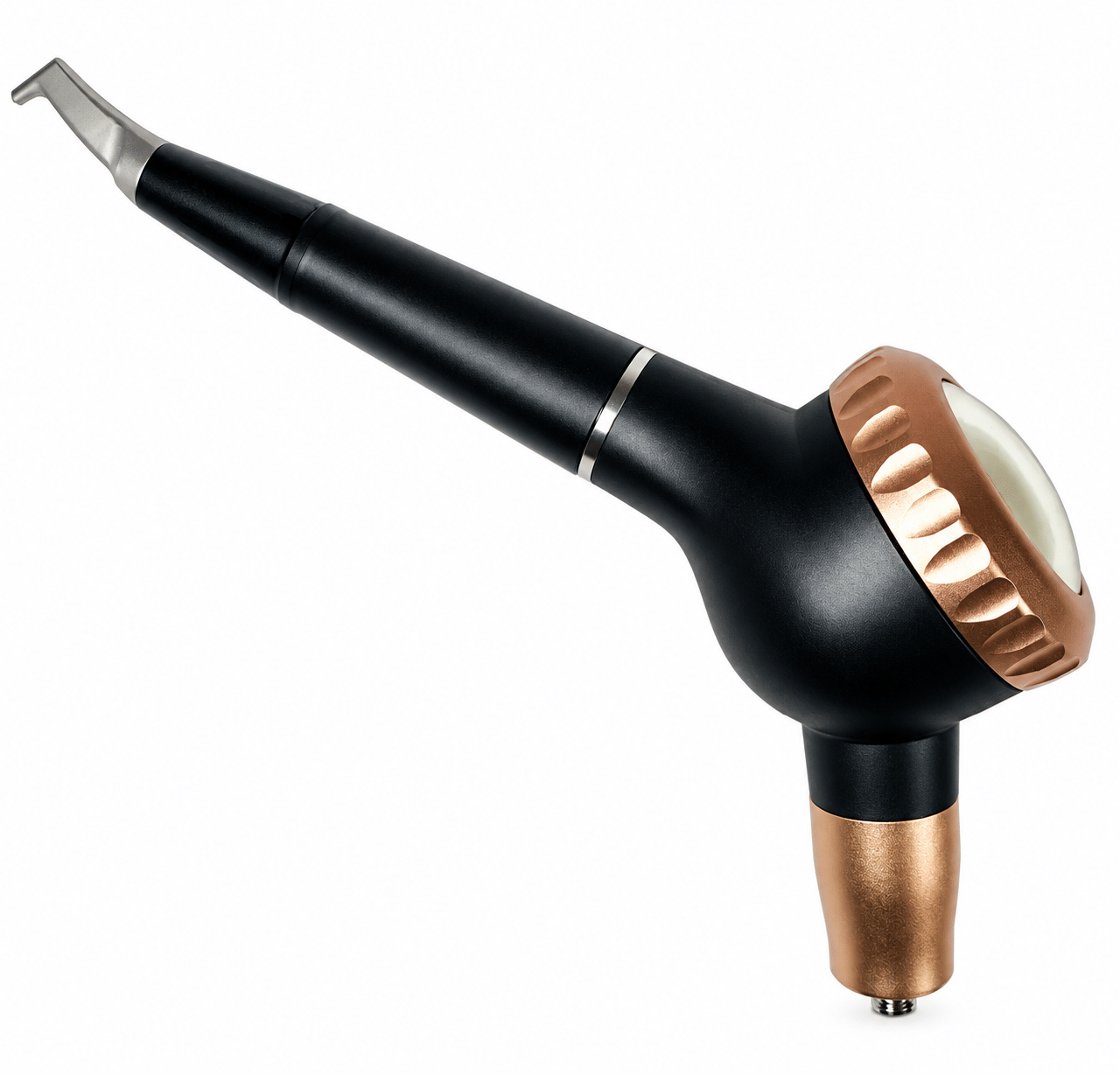
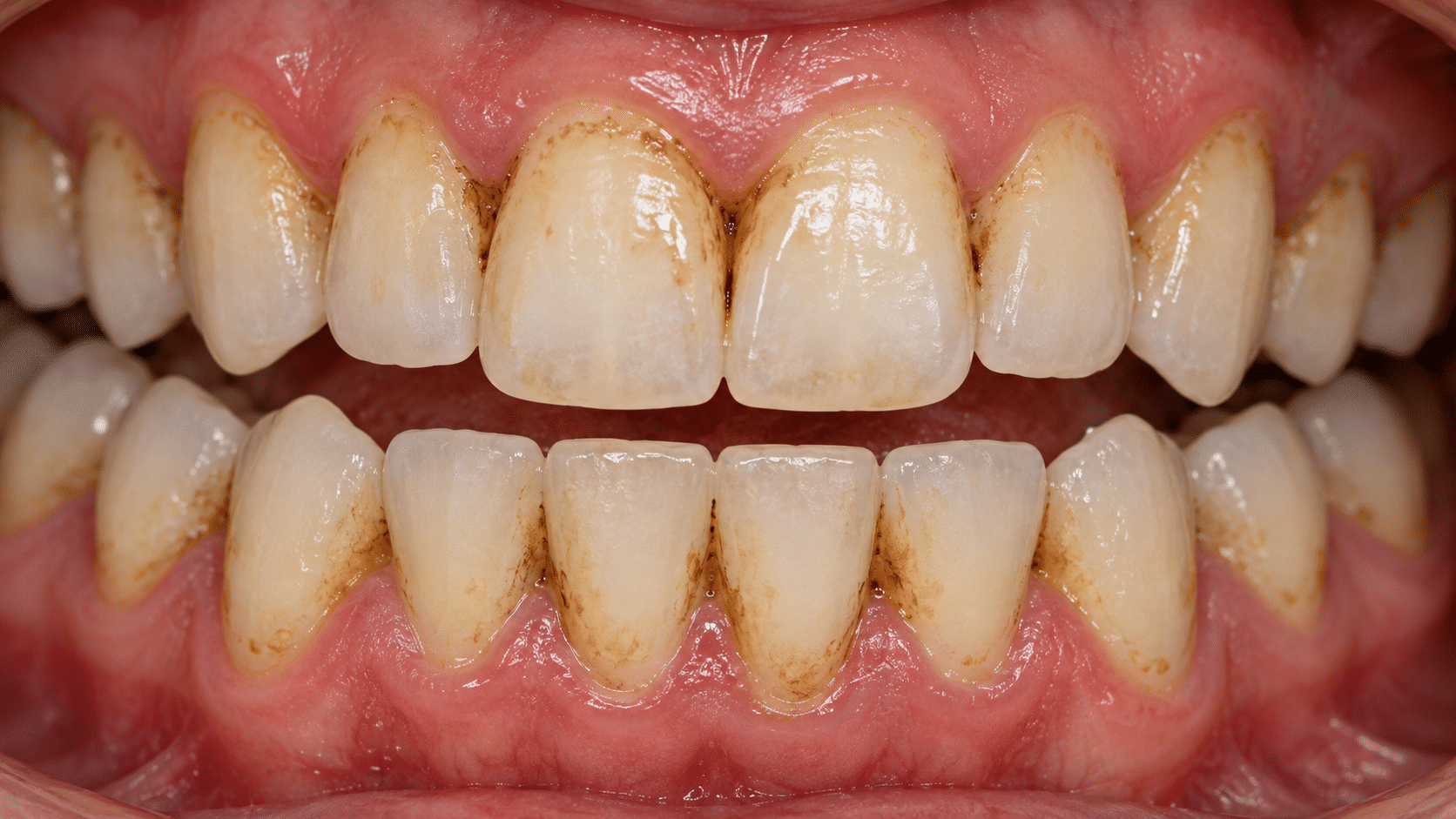
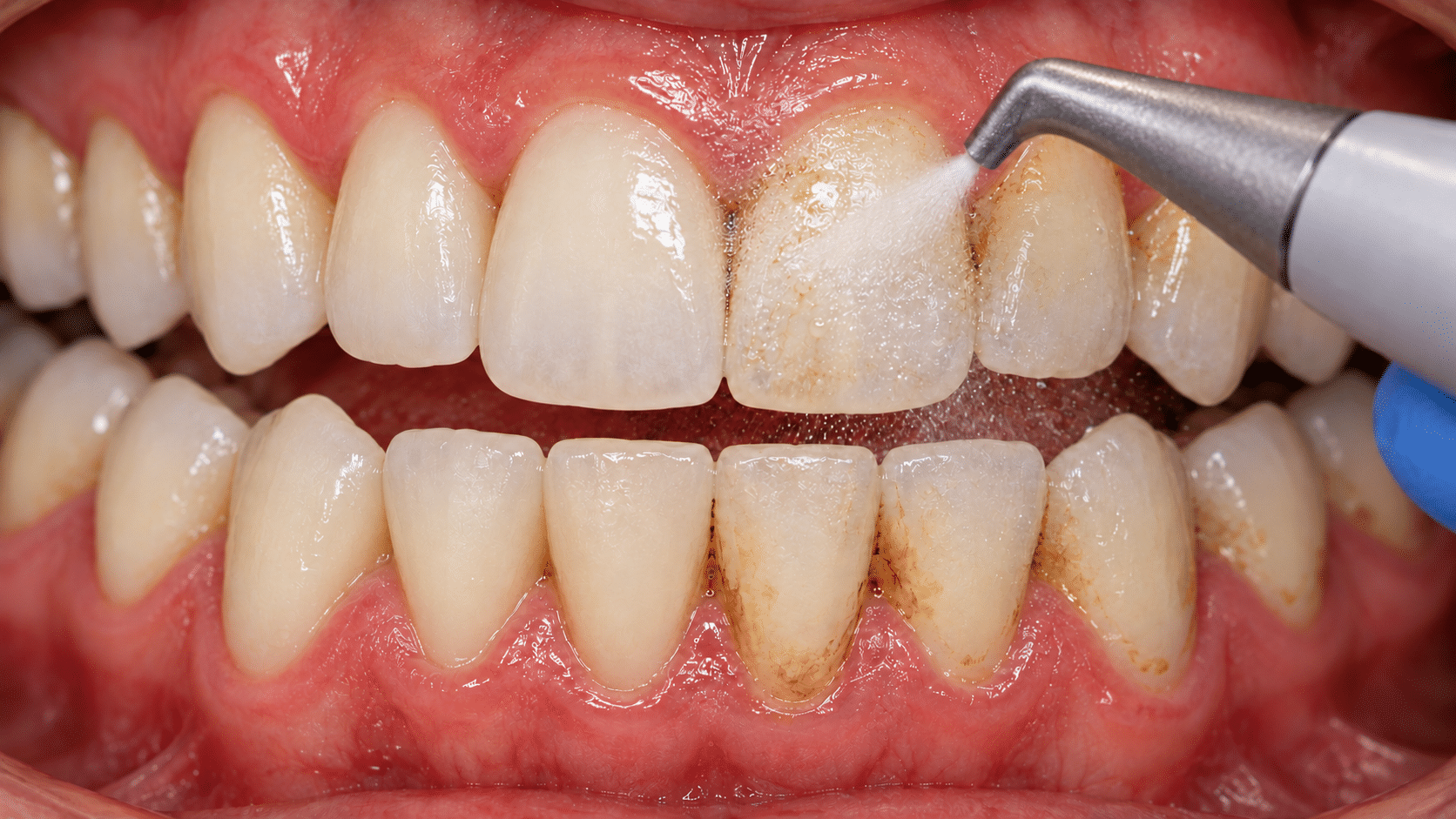
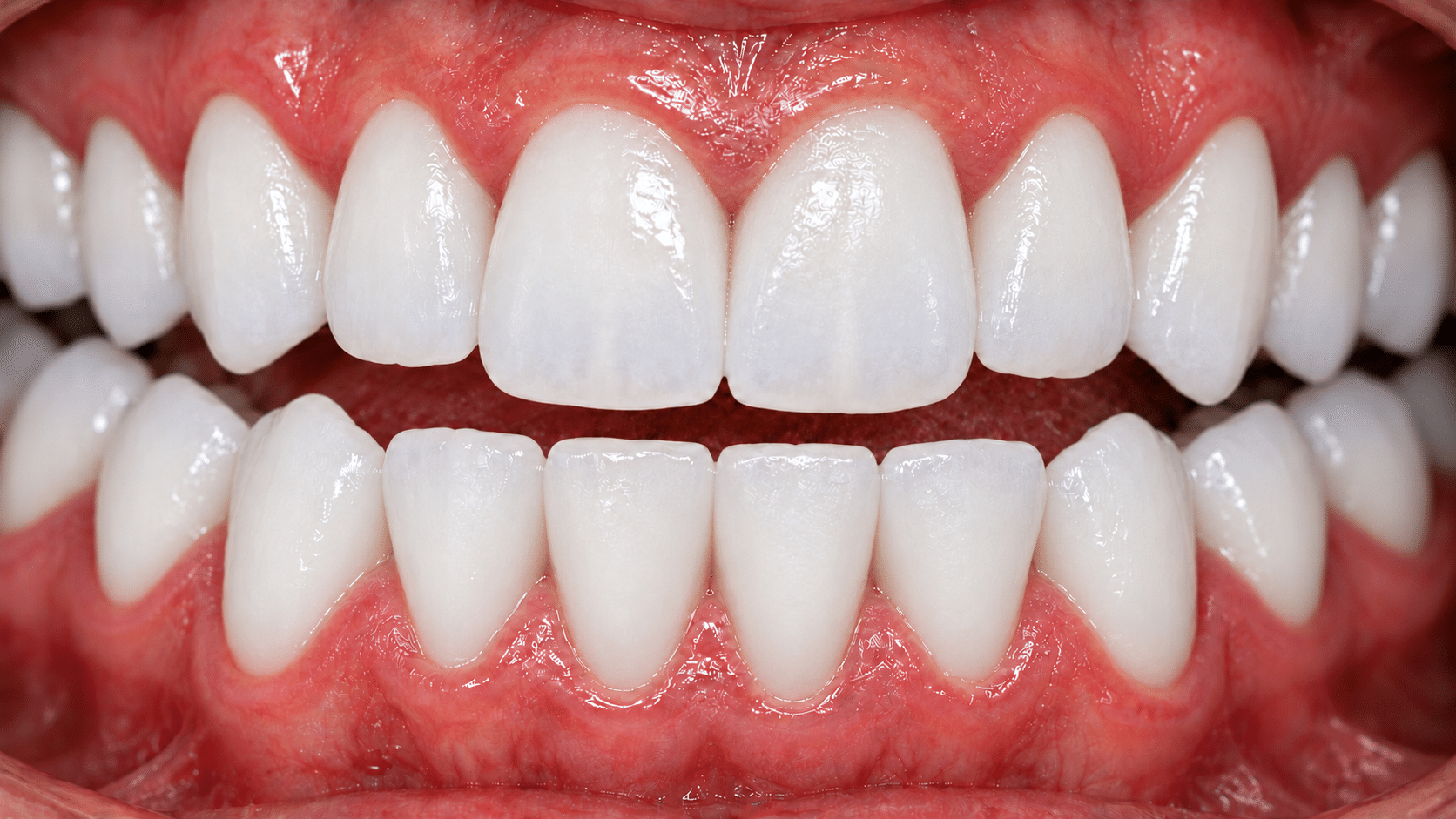
Tea and coffee can leave marks on your teeth that are difficult to remove with brushing alone. If you have noticed surface staining or would like your teeth to feel cleaner, you may have heard about Airflow teeth cleaning. This guide explains how professional air polishing works, how it differs from a scale and polish, and what you can expect at an appointment. At Dulwich Dental Centre, air polishing is available as part of our dental hygiene care. If you are looking for a dental hygienist in East Dulwich, explore our hygiene appointments and treatment options. Images are AI-generated illustrations, not patient results. The bright white example illustrates whitening, not an Airflow-only outcome. Airflow teeth cleaning is a term patients often use for professional air polishing. A handheld device delivers a controlled spray of air, water and specially formulated dental powder to clean suitable tooth surfaces. The spray helps remove external staining and the soft bacterial film called plaque or biofilm. The equipment and powder are selected according to your oral health and the surfaces being treated. Air polishing complements your daily brushing and interdental cleaning. Surface stains can build up from tea, coffee, tobacco and other sources. These marks affect the outside of the tooth. Plaque is a soft bacterial film that continually forms on teeth. When it is not adequately removed, it can contribute to oral health problems. Plaque can also harden into calculus, commonly called tartar, which requires professional removal. Not every yellow or dark area is a removable stain. Natural tooth colour, exposed roots, restorations and changes within a tooth can also affect appearance. Your dental team can assess the cause. These treatments have different roles and may be used together. Your dentist or hygienist will recommend an appropriate combination. Air polishing does not replace scaling when hardened deposits are present, or further periodontal care when this is needed. For more information about the stages of a hygiene visit, see our professional dental hygiene appointments. We discuss your concerns, review relevant medical information and assess your teeth and gums. Tell us about allergies, breathing conditions or tooth sensitivity. If hardened deposits are present, scaling may be needed. Air polishing can then be used on suitable areas with the appropriate powder and equipment. The handpiece directs the cleaning spray onto the tooth surfaces, while suction helps manage the water and powder. You may notice a spray sensation and a taste from the powder. Please tell us if anything feels uncomfortable so we can adapt your care. We explain how to maintain your oral hygiene and recommend a suitable interval for future appointments. Removing external stains may make teeth appear cleaner and brighter by revealing their natural shade. Air polishing does not bleach the teeth or change their underlying colour. Professional teeth whitening is a separate treatment that lightens the shade of natural teeth. If your goal is a whiter smile, we can assess the cause of the discolouration and explain your options. Suitability depends on your medical history, oral health, the equipment and powder used, and the surfaces being cleaned. If you have implants, crowns, veneers or fillings, your dental team will consider these when selecting the cleaning method. Treatment around restorations and implants requires appropriate equipment, powder and technique. An assessment helps establish whether air polishing is suitable or whether another approach would be more appropriate. Professional hygiene care works alongside a consistent home routine: Surface stains can return, and plaque forms continuously. Your habits, home care and individual needs will influence how often professional cleaning is helpful. It can remove many external stains, but it cannot address every cause of discolouration. Results depend on the type of staining and your teeth. It is primarily used for soft biofilm and external staining. Hardened tartar generally requires scaling. Experiences vary. You may feel the spray or notice sensitivity, particularly around sensitive areas. Tell your dental team so they can adjust your care. There is no single interval that suits everyone. Your dentist or hygienist will recommend a schedule based on your gum health, staining and other needs. Potentially, but the approach must be suitable for the restoration or implant surface. Your dental team will assess this before treatment. Whether you are concerned about tea and coffee stains or would like advice on your oral hygiene, we would be happy to help. Dulwich Dental Centre is at 29 Grove Vale, East Dulwich, London SE22 8EQ, near East Dulwich Station. We welcome new patients from East Dulwich, Dulwich Village and surrounding areas. Explore our dental hygiene and Airflow appointments to learn more about the care available and how to book. This article provides general information and does not replace an individual dental assessment.What is Airflow teeth cleaning?
Why do teeth develop stains and plaque?
Airflow versus a scale and polish: what is the difference?
Cleaning method What it does Scaling Removes hardened calculus using appropriate hand or powered instruments. Air polishing Removes soft biofilm and external staining using an air, water and powder spray. Conventional polishing Uses a polishing cup or brush and paste to remove suitable surface stains. What happens during an air-polishing appointment?
1. We assess your needs
2. We choose an appropriate cleaning approach
3. We remove surface staining and biofilm
4. We discuss home care
Does Airflow whiten teeth?
Is air polishing suitable for everyone?
Looking after your teeth between appointments
Frequently asked questions
Will air polishing remove all stains?
Does air polishing remove tartar?
Is the treatment uncomfortable?
How often should I have it?
Can I have air polishing if I have dental work?
Considering Airflow cleaning in East Dulwich?
Uncategorized
What Is Airflow Teeth Cleaning? A Guide for Patients
