
Oral Surgery · East Dulwich
Tooth Extractions in East Dulwich
At Dulwich Dental Centre, our first priority is always to save your natural teeth whenever
possible. However, when a tooth cannot be predictably restored, a gentle extraction may be
the best option to relieve pain, eliminate infection and protect your long-term oral health.
Section 1
Why might a tooth need to be removed?
Preserving your natural teeth is always our goal — but occasionally, extraction is the most appropriate treatment for your long-term health.
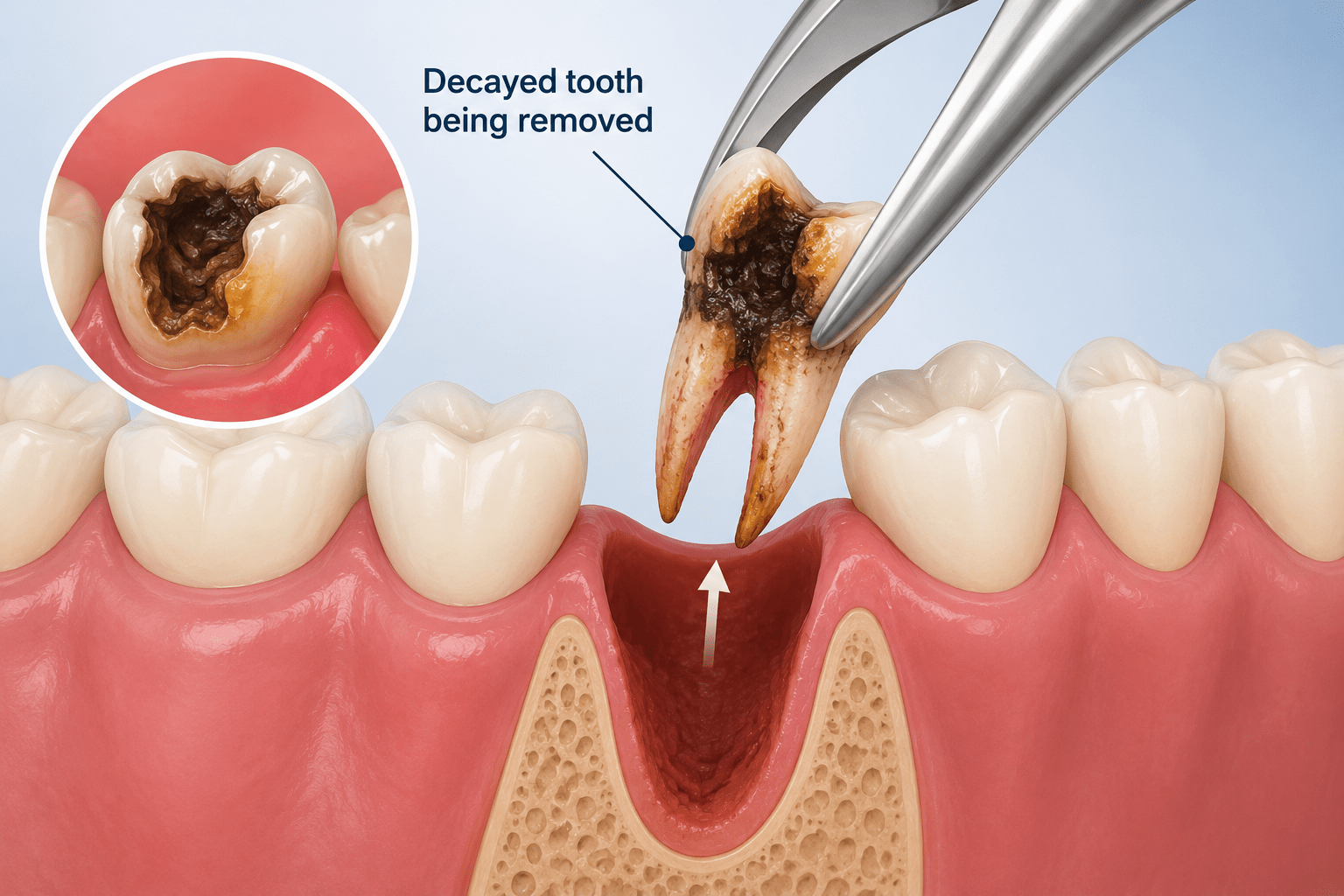
Common reasons for tooth extraction
- ✓ Severe tooth decay that cannot be restored
- ✓ A tooth broken below the gum line
- ✓ A tooth that cannot be predictably restored
- ✓ Advanced gum disease causing a loose tooth
- ✓ A tooth with a poor long-term prognosis
- ✓ Failed root canal treatment
Every patient is examined carefully — including X-rays and, where needed, a CBCT scan — before an extraction is recommended. We always discuss alternatives with you first.
Section 2
Failed Root Canal Treatment
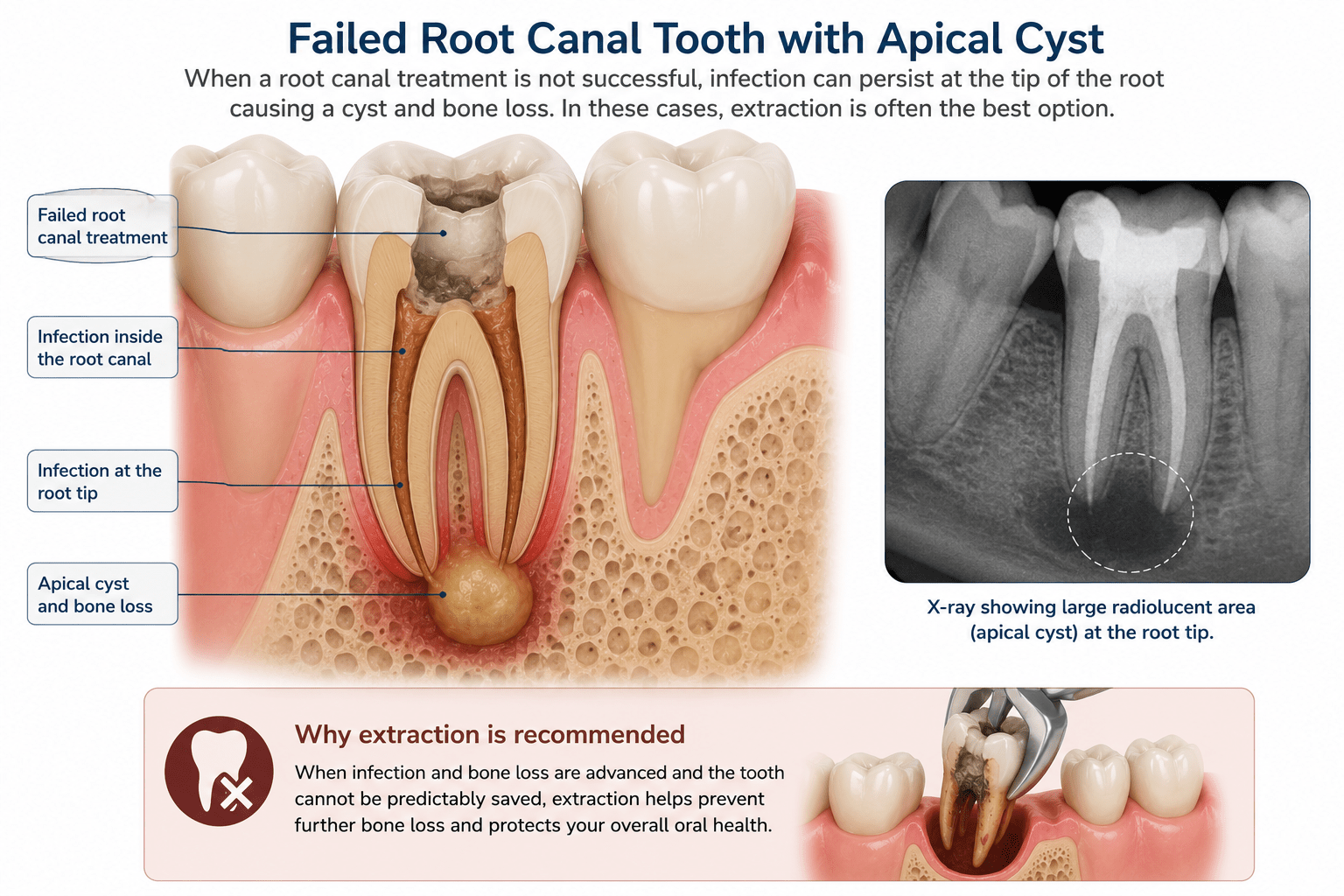
Sometimes root canal treatment is unsuccessful because infection remains at the tip of the root or returns months or years later.
Signs a root canal may have failed
- ✓ Persistent infection around the root
- ✓ Apical cyst or chronic low-grade infection
- ✓ Pain when biting or chewing
- ✓ Swelling or a recurring gum boil
- ✓ Large area of bone loss visible on an X-ray
Many failed root canals can be retreated or managed with apical surgery. Occasionally, however, the tooth cannot be predictably saved and a gentle extraction — often followed by socket preservation and a dental implant — becomes the best long-term option.
Section 3
What happens during a tooth extraction?
A calm, step-by-step process — carried out under local anaesthetic so you feel pressure, not pain.
- 1
Examination & X-rays
We assess the tooth, surrounding bone and nearby structures to plan a safe, predictable extraction.
- 2
Local anaesthetic
The area is fully numbed so the procedure is comfortable from start to finish.
- 3
Gentle removal
The tooth is loosened and removed using controlled, minimally-traumatic techniques.
- 4
Cleaning the socket
Any infected tissue is carefully removed and the socket is irrigated to encourage healthy healing.
- 5
Gauze placement
A sterile gauze pack is placed and you’ll be asked to bite firmly to help form a healthy blood clot.
- 6
Home care instructions
Clear written and verbal aftercare advice, plus our direct number should you need us.
You should feel pressure rather than pain — the tooth is always removed under effective local anaesthetic.
Section 4
Looking after the extraction site
Following these simple instructions reduces complications and promotes fast, comfortable healing.
Immediately after extraction
- ✓ Bite firmly on the gauze as directed
- ✓ Do not rinse your mouth for the first 24 hours
- ✓ Avoid smoking or vaping
- ✓ Avoid alcohol
- ✓ Eat soft, lukewarm foods
- ✓ Avoid strenuous exercise
Once the clot has stabilised
- ✓ Warm salt-water mouth rinses 3–4 times a day
- ✓ Continue brushing carefully, avoiding the socket
- ✓ Keep the area clean and free of debris
- ✓ Follow all instructions provided by your dentist
- ✓ Contact us if pain worsens after day 2 or 3
Section 5
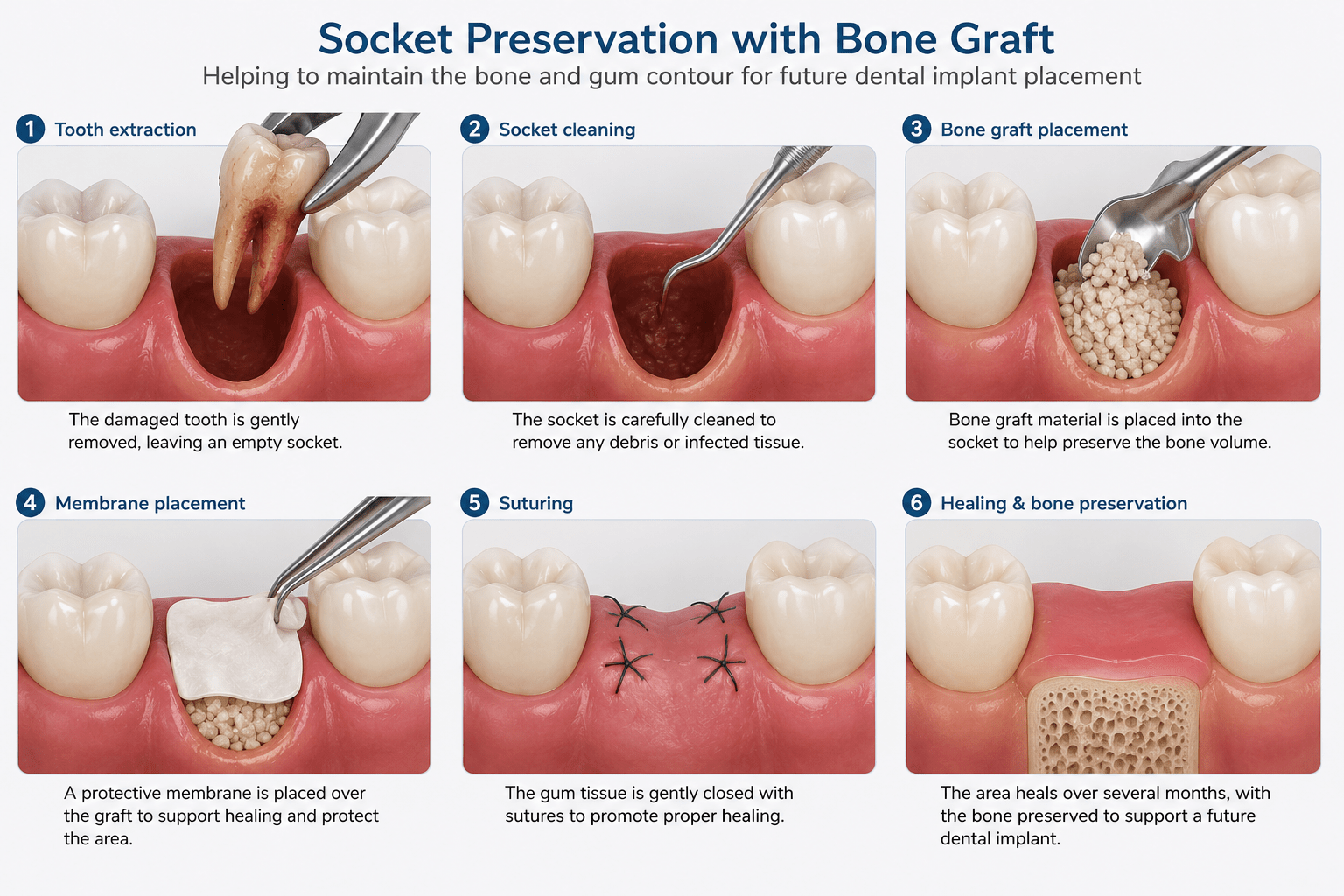
Socket Preservation with Bone Graft
Protecting the bone and gum contour so that a future dental implant is straightforward and predictable.
Why we recommend socket preservation
When a tooth is removed, the surrounding bone naturally shrinks over the following months. Socket preservation involves placing bone graft material into the extraction socket to help maintain bone volume and reduce this shrinkage.
- ✓ Helps preserve the natural bone
- ✓ Makes future implant treatment easier
- ✓ Improves long-term aesthetics
- ✓ Helps maintain the natural gum contour
Section 6
Replacing a missing tooth
After healing, there are two main options to restore both function and appearance.
Dental Implant
Often the best long-term replacement for a missing tooth — a titanium root supports a natural-looking crown, without affecting neighbouring teeth.
Dentures
For patients missing several teeth, modern dentures offer a comfortable, cost-effective way to restore your smile and chewing function.
Section 7
Dry Socket (Alveolar Osteitis)
Uncommon but painful — and always treatable. Here is what to look out for and how we help.
A lost blood clot
Dry socket occurs when the protective blood clot is lost too early after an extraction, exposing the underlying bone and nerve endings.
How to recognise it
- ✓ Severe pain 2–5 days after extraction
- ✓ Pain radiating to the ear or jaw
- ✓ Bad taste or unpleasant smell
- ✓ An empty-looking socket
Common causes
- ✓ Smoking or vaping
- ✓ Using a straw
- ✓ Vigorous rinsing in the first 24 hours
- ✓ Difficult or surgical extractions
- ✓ Occasionally despite following instructions
How we manage dry socket
Treatment is straightforward and gives fast relief. We examine the area, gently clean the socket, place a soothing medicated dressing where appropriate, provide pain relief advice and see you for follow-up until symptoms improve. Although dry socket can be very uncomfortable, it is treatable and does not usually affect the long-term healing of the area.
Section 8
Pericoronitis (Wisdom Tooth Infection)
Inflammation or infection of the gum around a partially erupted wisdom tooth.
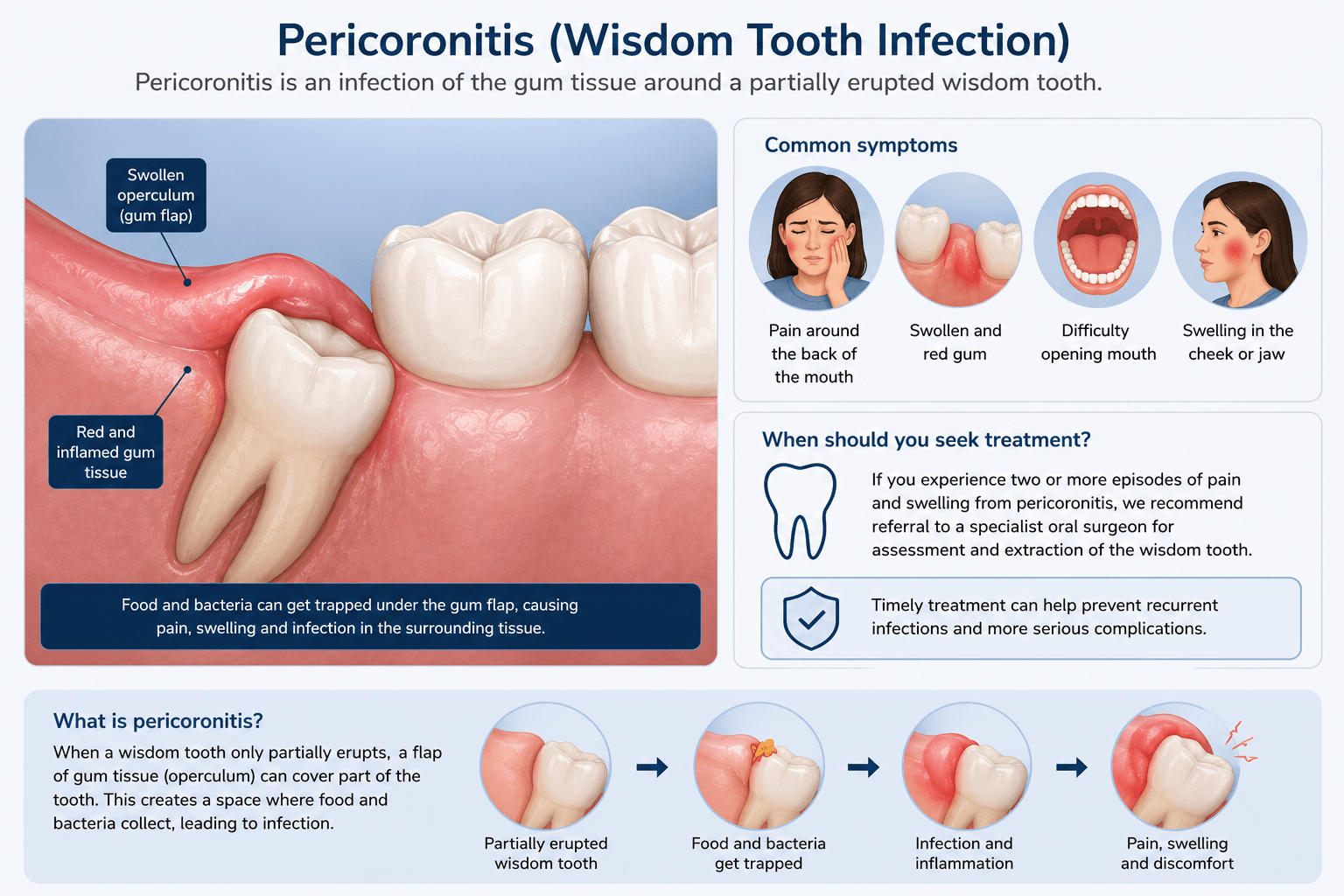
Common symptoms
- ✓ Pain at the back of the mouth
- ✓ Swelling of the gum around the wisdom tooth
- ✓ Difficulty opening the mouth
- ✓ Bad taste or bad breath
- ✓ Difficulty chewing
The first episode is usually managed by cleaning the area, irrigating beneath the gum flap, improving oral hygiene and — only when clinically indicated — prescribing antibiotics.
If you experience recurrent episodes (typically two or more episodes of pain and swelling), referral to an oral surgeon or hospital for wisdom tooth extraction is usually recommended.
At Dulwich Dental Centre we provide assessment and initial management of pericoronitis. Complex wisdom tooth extractions are referred to an appropriate specialist when necessary.
Section 9
Frequently Asked Questions
Everything patients in East Dulwich commonly ask about tooth extractions.
Will a tooth extraction hurt?
No — the area is fully numbed with local anaesthetic. You should feel pressure and movement, but not sharp pain. Any tenderness afterwards is easily managed with simple pain relief.
How long does healing take?
The gum surface usually closes within 1–2 weeks. Full bone healing beneath the gum takes about 8–12 weeks, which is why we often wait this long before placing an implant.
Can I eat after an extraction?
Yes — stick to soft, lukewarm foods for the first 24 hours and chew on the opposite side. Avoid very hot food or drinks and anything crunchy that could disturb the socket.
Can I brush my teeth afterwards?
Yes, continue to brush your other teeth normally. Avoid the extraction site for the first 24 hours, then brush around it gently and use warm salt-water rinses.
What is dry socket?
Dry socket happens when the protective blood clot is lost too early, exposing the bone. It causes severe pain 2–5 days after extraction and is easily treated with a soothing dressing.
What should I do if bleeding continues?
Some oozing for a few hours is normal. If bleeding continues, bite firmly on a clean piece of gauze or a damp tea bag for 20 minutes. If it does not settle, please call the practice.
Can I smoke after an extraction?
We strongly advise against smoking or vaping for at least 72 hours — ideally longer. Smoking is one of the biggest causes of dry socket and delayed healing.
Will I need to replace the missing tooth?
Most patients benefit from replacing a missing tooth to maintain function, prevent neighbouring teeth from drifting and preserve bone. Options include a dental implant or a denture.
How long does socket preservation take?
The bone graft is placed at the same appointment as the extraction. Healing takes around 3–4 months before the site is ready for an implant.
When should I contact the practice?
Please contact us if you experience heavy bleeding, worsening pain after day 2 or 3, significant swelling, fever, or any concern about the extraction site.
Gentle Tooth Extractions · East Dulwich
Book your consultation today
Our experienced team will assess your tooth, discuss every option to save it where possible, and — if extraction is the best choice — carry it out gently and comfortably.