
Dental Implants
Dental Implants in East Dulwich
Replace missing teeth with natural-looking dental implants placed by Dr Alireza Samadi using modern digital planning and CBCT-guided assessment at Dulwich Dental Centre, SE22.
What Are Dental Implants?
A modern way to replace missing teeth
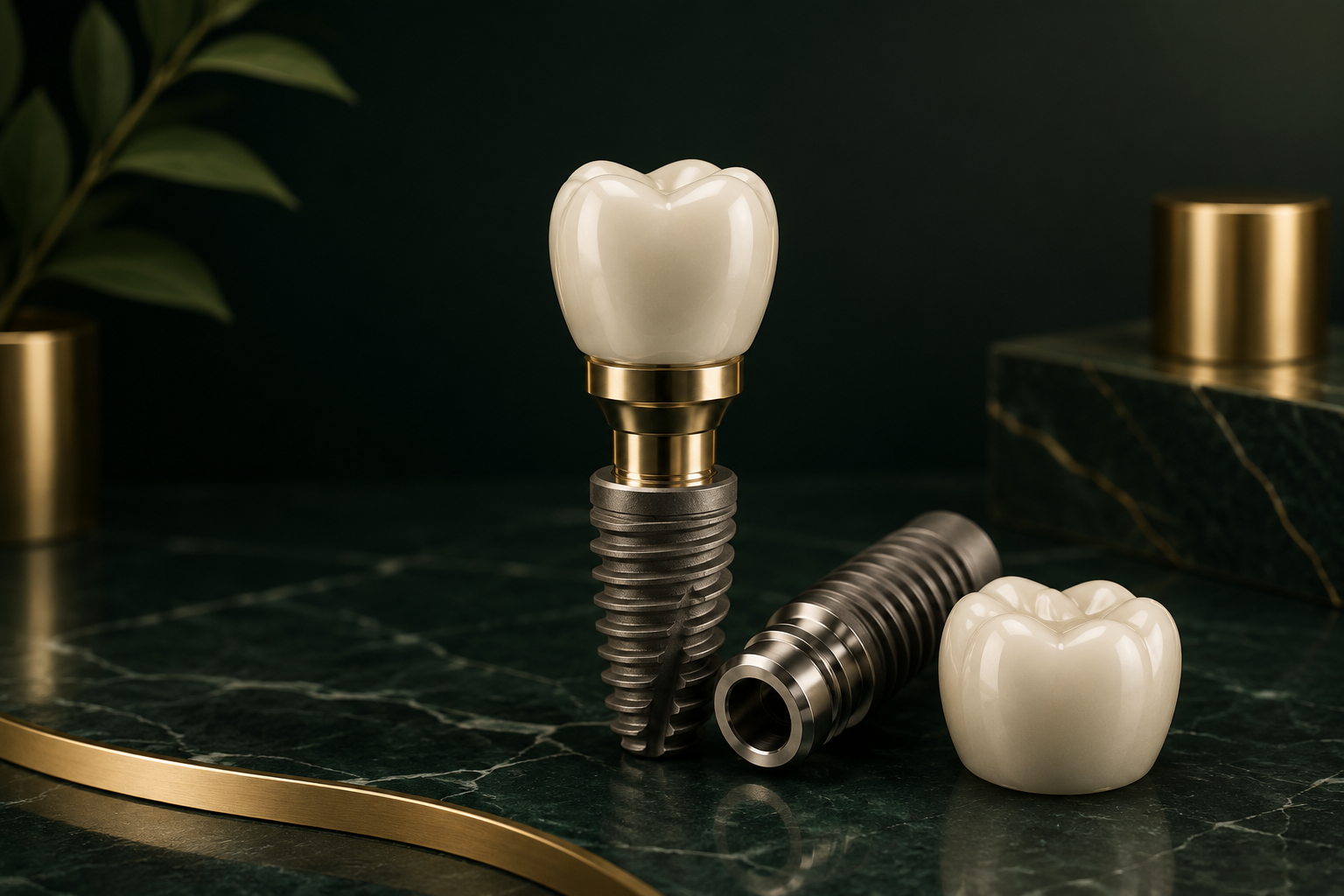
A dental implant is a small, biocompatible titanium post that is gently placed into the jawbone to take the place of the root of a missing tooth. Once healed, the implant fuses with the surrounding bone in a natural process called osseointegration, providing a strong and stable foundation for a crown, bridge or full-arch restoration. At Dulwich Dental Centre we provide Dental Implants in East Dulwich for patients across Dulwich, Peckham, Camberwell and the wider SE22 community.
Because an implant replaces both the root and the crown of a lost tooth, it behaves in a way that is remarkably close to a natural tooth. It preserves the surrounding bone, protects the neighbouring teeth from being drilled or altered, and restores full chewing strength, speech and confidence. Whether you need a Single Tooth Implant or a longer-term plan for Multiple Teeth Replacement, our experienced Implant Dentist in East Dulwich, Dr Alireza Samadi, will guide you through every stage with clarity, honesty and gentle care.
Tooth Loss
Why do people lose teeth?
Tooth loss can happen at any age, and it is rarely just one thing. Understanding the underlying cause is the first step in planning a long-lasting replacement.
Decay
Deep or untreated dental decay can destroy so much tooth structure that the tooth can no longer be saved.
Failed root canal treatment
When a previously root-treated tooth reinfects or fractures, extraction is sometimes the safest option.
Gum disease
Advanced gum disease weakens the bone and ligaments that support the teeth, causing them to loosen.
Cracked teeth
Deep cracks — often from grinding or heavily filled teeth — can extend below the gum and require removal.
Trauma
Sports injuries, falls or accidents can knock out or fracture teeth beyond repair.
Infection
Untreated dental abscesses can spread and damage surrounding bone, sometimes leading to tooth loss.
Why Replace
Why should missing teeth be replaced?
Leaving a gap is rarely without consequence. Even a single missing tooth can gradually change the mouth in ways that are much harder to correct later.
Bone loss
Without a tooth root stimulating the jaw, the bone in that area slowly shrinks — often visibly changing the shape of the face over time.
Teeth drifting
Neighbouring teeth begin to tilt into the gap, and opposing teeth can over-erupt downwards or upwards.
Bite changes
As teeth move, the bite becomes uneven. This can strain the jaw joint and lead to headaches or muscle pain.
Gum recession
Drifted, tilted teeth are harder to clean, which can accelerate gum recession and future tooth loss.
Difficulty chewing
Missing teeth make it harder to chew comfortably, often pushing all the work onto one side of the mouth.
Appearance
Gaps and long-term bone loss affect the smile line and lip support, which can knock confidence over time.
Compare
Dental Implant vs Bridge
A traditional bridge and a dental implant both replace missing teeth, but they behave very differently over the long term. Here is an honest side-by-side comparison.
| Consideration | Dental Implant | Traditional Bridge |
|---|---|---|
| Adjacent teeth | Preserved — no drilling required | Neighbouring teeth must be prepared and reduced |
| Bone health | Stimulates and preserves the jawbone | Does not preserve underlying bone |
| Structure | Independent restoration on its own root | Supported by the neighbouring teeth |
| Lifespan | Designed to last many years, often decades | May need replacement sooner |
| Cleaning | Cleaned like a natural tooth | Requires special flossing under the bridge |
| Aesthetics | Very natural — emerges from the gum | Excellent, but relies on gum shape around abutments |
A bridge can still be the right option in some cases — for example when the neighbouring teeth already need crowns. We will always talk you through the pros and cons of each option before you decide.
Your Care
Dental Implant Treatment at Dulwich Dental Centre
Every patient receives an individual assessment and a personalised treatment plan built around their needs, expectations and long-term oral health.
Your consultation begins with a thorough clinical examination, digital planning and, when required, a CBCT assessment to evaluate bone quality and vital anatomy. We take time to discuss your treatment options, explain the benefits and risks, outline expected healing and answer any questions you may have.
We provide a clear discussion of cost and timeline before treatment begins, so there are no surprises. Although every patient is different, most implant treatment follows a similar pathway — assessment, placement, healing, restoration — designed to deliver a strong, natural-looking result you can trust.
Your Journey
Your 5-step implant journey
Five carefully guided stages — from your initial CBCT scan and consultation through to the fitting of your beautiful new implant crown.
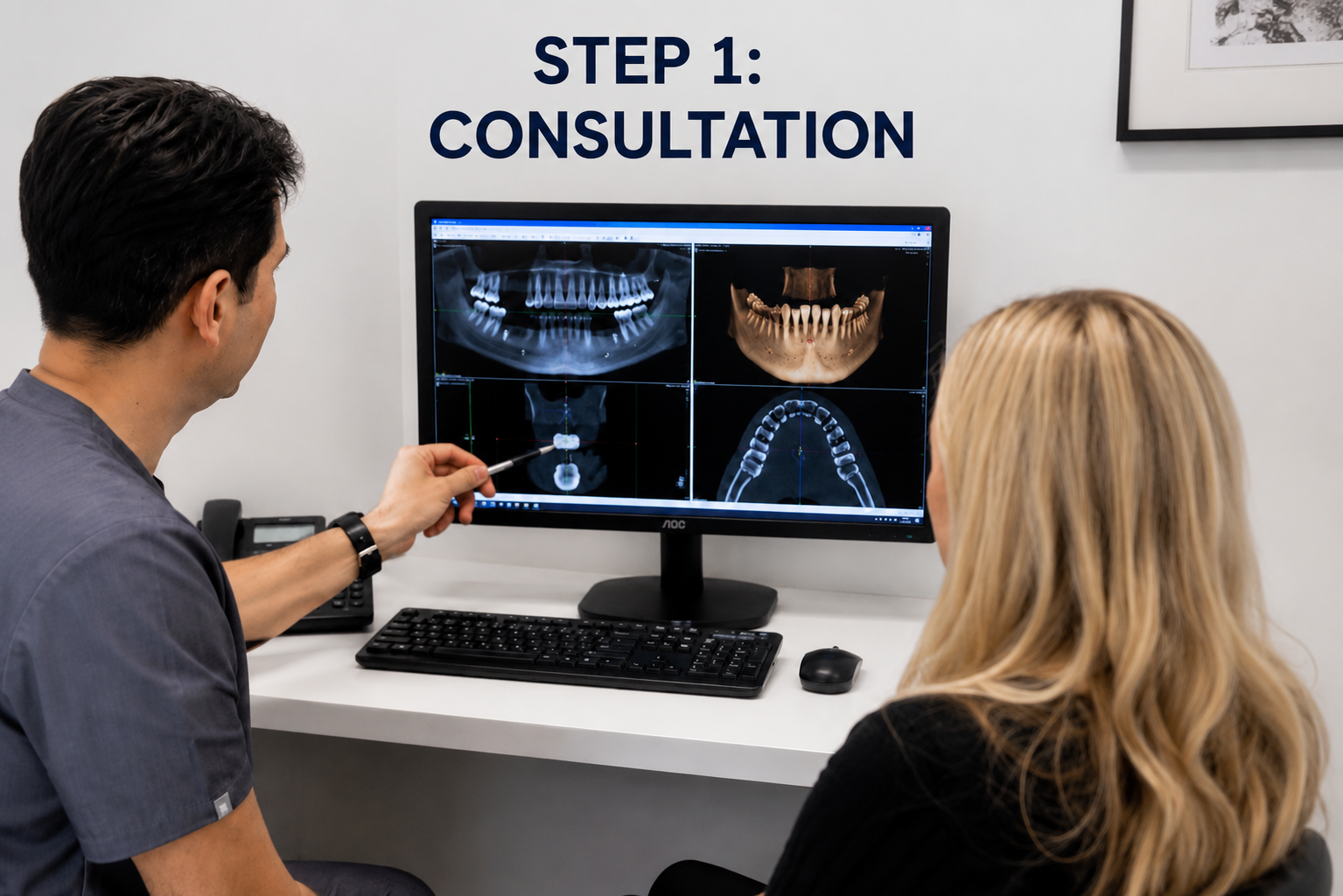
Step 1Consultation
We carefully assess your mouth, take any necessary X-rays or CBCT scans, evaluate bone quality and discuss your treatment options. We explain the procedure, healing time and answer all your questions before treatment begins.
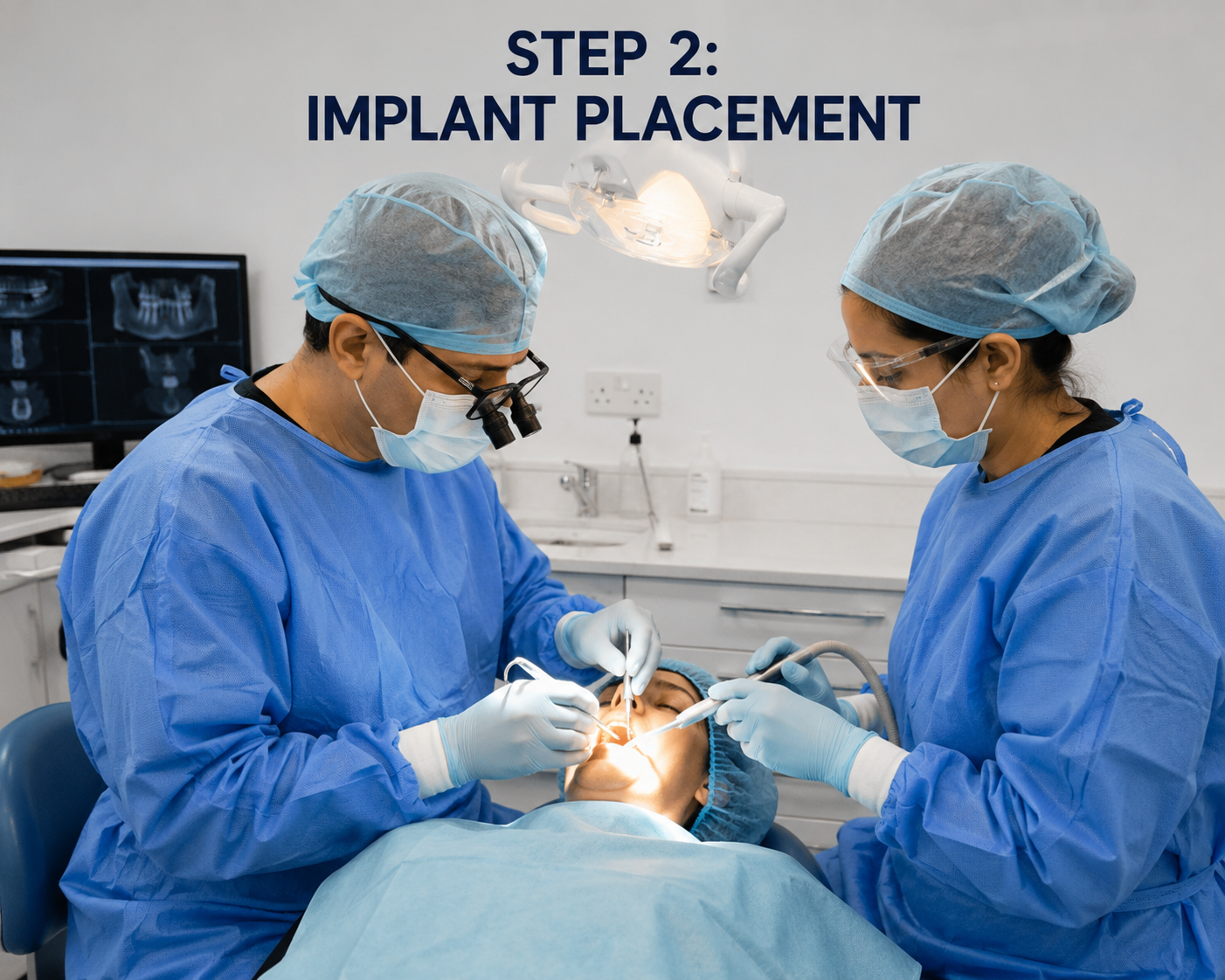
Step 2Implant Placement
The implant is gently placed into the jawbone under local anaesthetic. Most patients are surprised how comfortable the procedure is. Healing then begins as the implant naturally integrates with the bone.
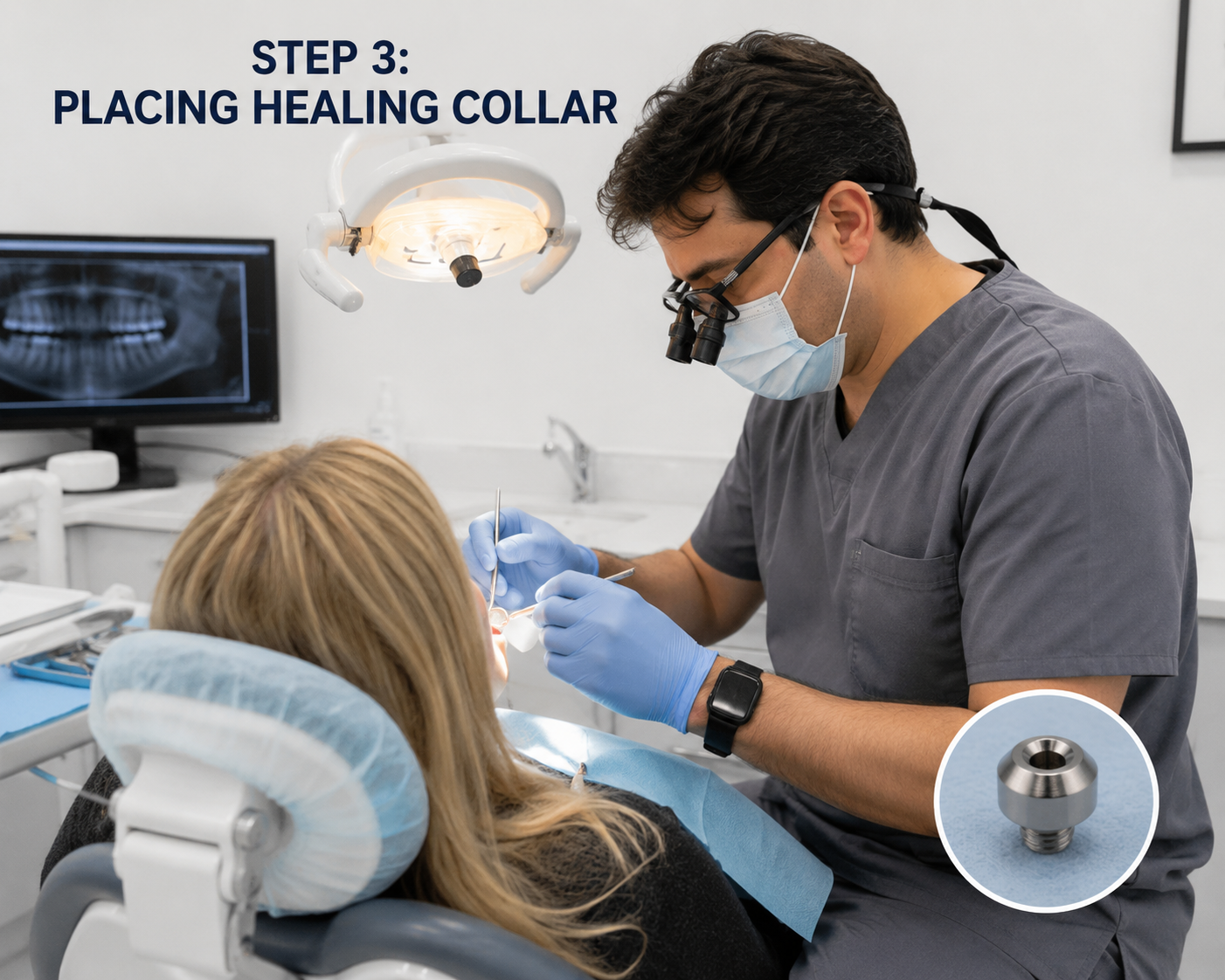
Step 3Healing Collar
After successful healing, a small healing collar is placed for approximately two weeks. This shapes the gum tissue to create a healthy and natural emergence profile before the final restoration.
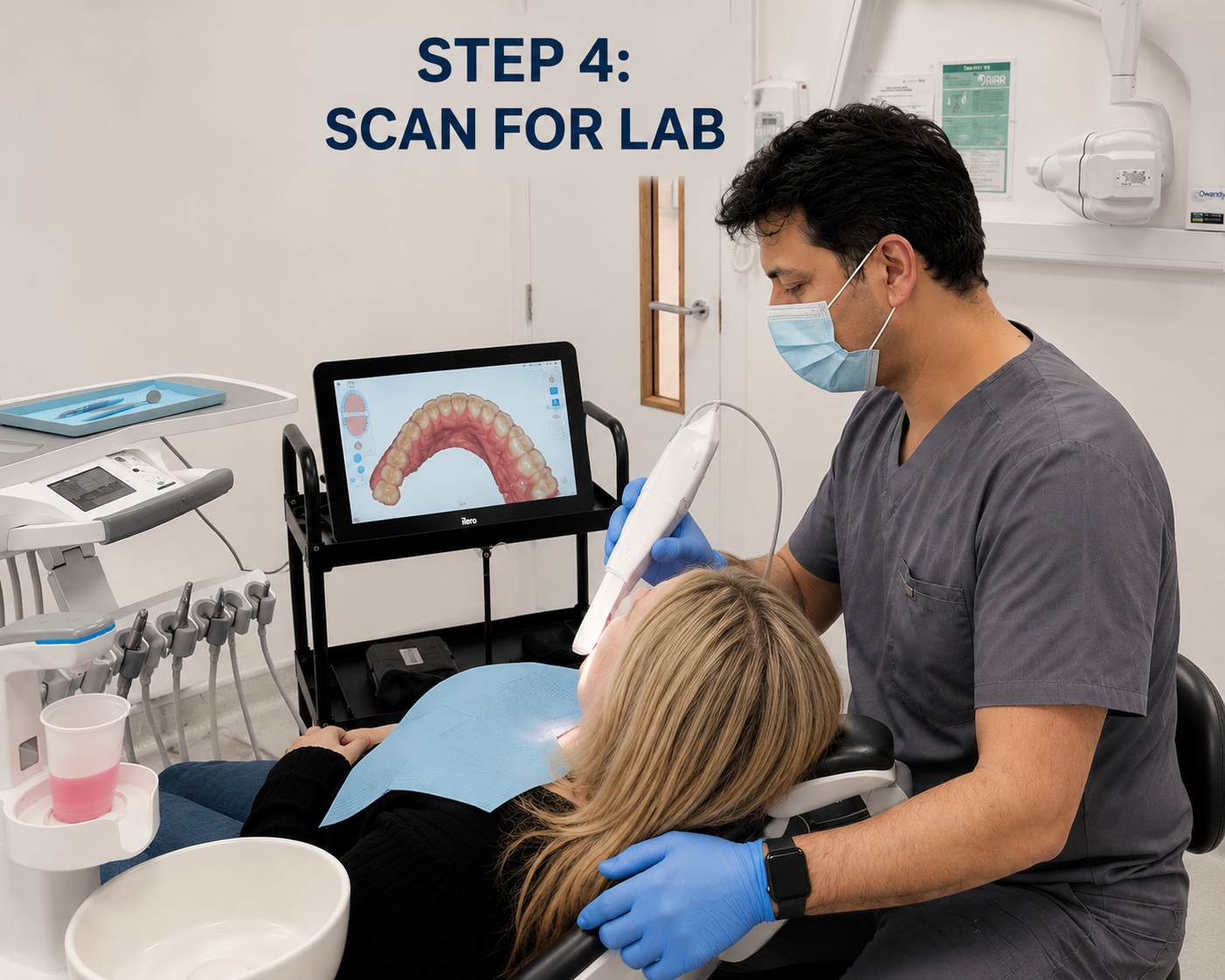
Step 4Digital iTero Scan for the Laboratory
Once the gums have healed, we take a precise digital scan using our iTero scanner. The scan is sent to the dental laboratory where your custom-made ceramic crown is carefully designed.
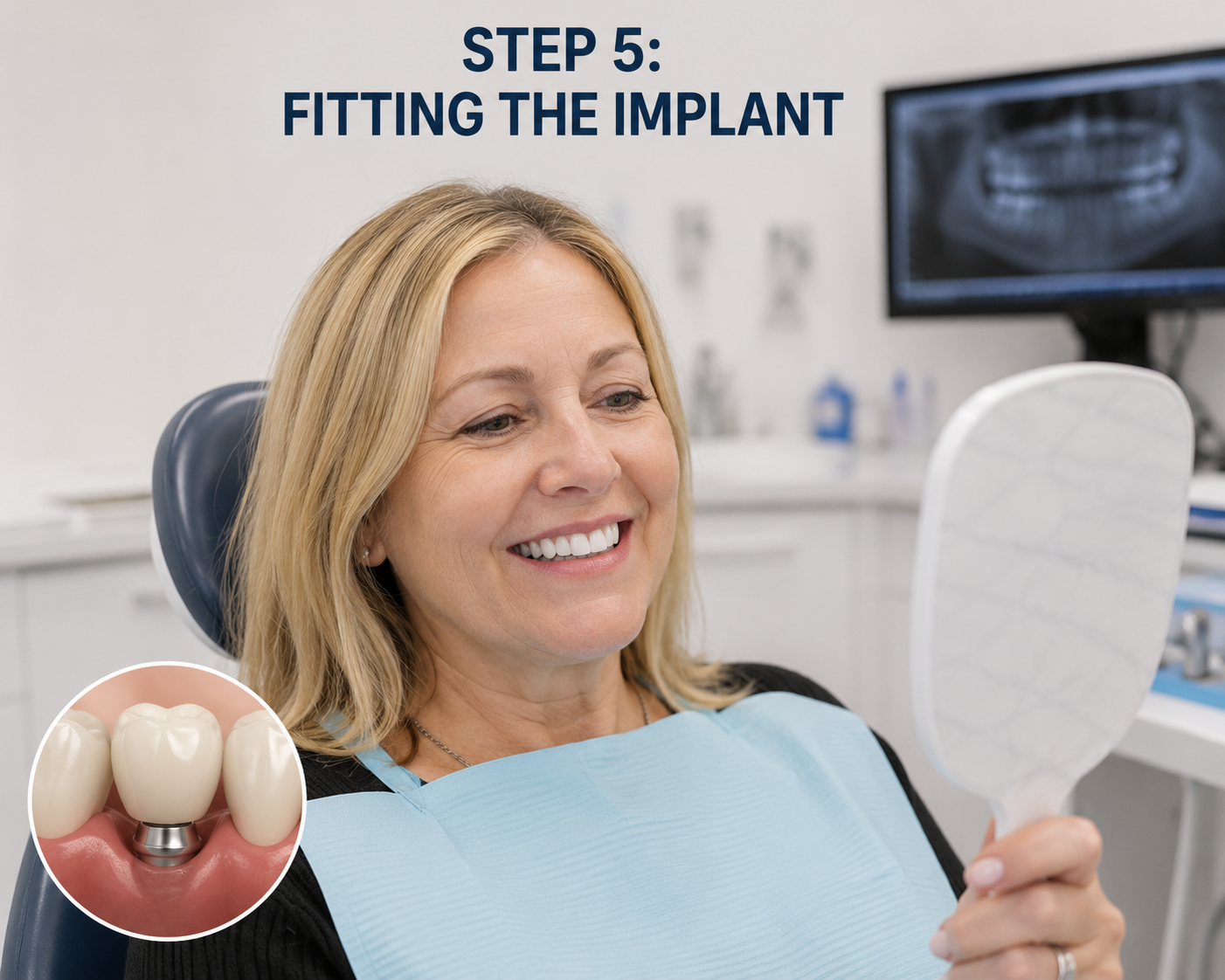
Step 5Fitting Your New Implant Crown
Your custom crown is securely fitted onto the implant. We carefully check the bite, appearance and comfort, giving you a strong, natural-looking replacement tooth designed to function like your own.
Suitability
Who Is Suitable for Dental Implants?
Most healthy adults are suitable for dental implants. A full assessment allows us to plan the safest and most predictable treatment for you.
Suitable Candidates
Ideal candidates usually have
- Healthy gums
- Good oral hygiene
- Adequate bone volume
- Non-smokers (higher success rates)
- Controlled diabetes — usually acceptable
- Adults with completed jaw growth
When Implants May Not Be Suitable
Treatment may need to be delayed or modified
- Untreated gum disease
- Heavy smoking
- Poor oral hygiene
- Insufficient bone
- Certain uncontrolled medical conditions
- Certain medications (e.g. some bone-active drugs)
- Pregnancy (elective treatment postponed)
Bone grafting or sinus lifting may sometimes make treatment possible where bone volume is limited.
Bone Grafting
When bone grafting may be needed
A dental implant needs enough healthy bone around it to be stable and predictable. When a tooth has been missing for a long time, or has been lost to gum disease or infection, some of the surrounding bone may have shrunk away. In those cases, a small bone graft can gently rebuild the ridge so an implant can be placed safely.
In the upper back jaw, a specialised procedure called a sinus lift may be used to gain extra height. Grafting sounds daunting but is a well-established, comfortable procedure — most of our patients tell us it was much easier than they expected. Whether or not you need any grafting is decided using your CBCT scan at the consultation, so you know the full plan before anything begins.
Longevity
How long do implants last?
A well-placed and well-maintained dental implant can last for many decades — and often for the rest of a patient’s life. Long-term studies consistently show that modern implants have excellent survival rates 10, 15 and even 20 years after placement.
The crown or bridge attached to the implant is a separate component. It is designed to be strong and stable, but like any restoration it can occasionally need repair or renewal over time. Regular reviews with your dentist and hygienist are the single most reliable way to help both the implant and its restoration last as long as possible.
Long-term implant success
Success Rate
Excellent long-term outcomes
Modern dental implants have excellent long-term success when they are properly planned, professionally maintained and supported by excellent oral hygiene and regular dental reviews. Smoking, uncontrolled diabetes and poor cleaning are the main factors that can increase the risk of implant failure.
Honest & Reassuring
Are there any risks?
Dental implants are a well-established, predictable treatment, but no dental procedure is completely without risk. We believe patients deserve a clear, honest explanation before making any decision.
Post-operative discomfort
Some mild swelling, bruising or tenderness is normal for a few days after implant surgery. Simple pain relief is usually enough.
Infection
Uncommon, and usually managed easily if it does occur. Careful hygiene and following aftercare instructions greatly reduce the risk.
Nerve or sinus involvement
Very rare with modern CBCT planning, which lets us map nerves and sinuses in 3D before any implant is placed.
Failure of osseointegration
Occasionally an implant does not fuse fully with the bone. If this happens, the implant is removed, the site heals and a replacement is normally possible.
Peri-implantitis
Gum inflammation around an implant, similar to gum disease, is preventable with regular hygiene visits and good home care.
Wear of the restoration
The crown itself can chip or wear over many years and may occasionally need refurbishment or replacement.
All-on-4 East Dulwich
All-on-4 Dental Implants
All-on-4 is an advanced full-arch solution that replaces an entire upper or lower set of teeth using just four carefully positioned implants supporting a fixed bridge. It is a life-changing option for patients missing all their teeth, patients with failing teeth, those struggling with loose dentures and anyone who wants fixed, natural-looking teeth again.
Who benefits
- Patients missing all teeth
- Patients with failing teeth
- Patients with loose dentures
- People wanting fixed teeth
Key advantages
- Fewer implants required
- Fixed bridge — no removal
- Improved chewing
- Improved confidence
- Often avoids extensive grafting
Not every patient is suitable for All-on-4 — a comprehensive assessment is always required to plan the safest, most predictable result.
Benefits
Benefits of Dental Implants
A modern, tooth-preserving solution for long-term function, comfort and confidence.
Natural appearance
Looks and feels like a real tooth.
Restore chewing
Eat comfortably with strong bite force.
Protect neighbours
No need to grind down healthy teeth.
Preserve bone
Stimulates the jawbone like a natural root.
Long-lasting
Designed to serve you for many years.
Comfortable
Feels stable and secure in the mouth.
Improve confidence
Smile, speak and socialise with ease.
Stable replacement
Firmly anchored — no slipping or movement.
Aftercare
Looking After Your Implant
Professional maintenance and simple daily habits greatly improve the longevity of your dental implants. A dental implant is not a “fit and forget” solution — it thrives on the same care that keeps natural teeth healthy.
Brush & clean daily
Brush twice daily and clean carefully around the implant to keep the gum healthy.
Interdental brushes
Use interdental brushes to gently remove plaque between teeth and around the implant.
Regular hygiene visits
Attend hygienist appointments to protect the gum and bone supporting your implant.
Avoid smoking
Smoking significantly increases the risk of implant failure and bone loss.
Book Online
Book Your Implant Consultation
Complete the form below and our team will contact you to arrange your consultation.
FAQ
Frequently Asked Questions
Everything you may want to know about dental implants at Dulwich Dental Centre.
Does implant placement hurt?
The procedure is carried out under local anaesthetic so it is not painful. Most patients are surprised by how comfortable the appointment is, with only mild soreness for a few days afterwards.
How long does the whole treatment take?
Typical treatment takes 3–6 months from placement to fitting the final crown, allowing time for the implant to fuse with the bone. Cases involving grafting may take a little longer.
Can anyone have dental implants?
Most healthy adults are suitable. A clinical examination and often a CBCT scan will confirm whether implants are the right option for you.
How long do implants last?
With good hygiene and regular reviews, dental implants can last many years — often several decades, and in many cases for life.
Can implants fail?
Failure is uncommon. The main risk factors are smoking, uncontrolled diabetes, poor cleaning and untreated gum disease.
Can smokers have implants?
Yes, but smoking reduces success rates. We strongly recommend stopping — or reducing — smoking before and after treatment.
Am I too old for a dental implant?
Age itself is not a barrier — many of our implant patients are in their 60s, 70s and 80s. Overall health matters much more than age.
How do I clean my implant?
Brush twice daily, use interdental brushes and attend regular hygiene appointments — very similar to caring for a natural tooth.
How much do dental implants cost?
Costs vary depending on the number of implants, any grafting required and the type of restoration. A clear, itemised quotation is provided at your consultation.
Is bone grafting always necessary?
No. Grafting is only required when there is insufficient bone volume — this is assessed with a CBCT scan.
Will I be without a tooth during healing?
In most cases we can provide a temporary tooth — either a bonded solution or a small removable option — so you are not left with a visible gap.
Is an implant better than a bridge?
For most patients, yes. An implant preserves bone and avoids drilling adjacent teeth. A bridge can still be suitable in some clinical situations.
Can I have an implant if I’ve worn dentures for years?
Often, yes. Even long-term denture wearers can benefit from implants — sometimes with grafting to rebuild lost bone.
Will my implant look natural?
Yes. The final crown is custom-made to match the shape, shade and character of your surrounding teeth.
Will an implant feel like my own tooth?
Most patients describe it as feeling just like a natural tooth once healing is complete.
Can I eat normally after treatment?
Once healed and restored, you can eat as you would with a natural tooth. During healing we recommend softer foods for a short period.
What is All-on-4?
All-on-4 is a full-arch solution using four implants to support a fixed bridge of teeth — ideal for patients missing most or all of their teeth in a jaw.
Do you offer sedation?
For nervous patients we can discuss options at your consultation to keep you comfortable and relaxed throughout treatment.
What if my implant is not successful?
In the rare event an implant does not integrate, it is removed, the area heals and a replacement implant can usually be placed once the site is ready.
Why Choose Us
Why Choose Dulwich Dental Centre
Modern digital implant dentistry in East Dulwich, delivered by an experienced, patient-focused team.
Digital Planning
Precise, predictable implant planning using modern digital tools.
Modern Equipment
iTero scanners, digital imaging and advanced surgical tools.
CBCT Assessment
3D imaging for accurate bone evaluation and safer placement.
Personalised Treatment
Every plan tailored to your health, goals and lifestyle.
Friendly Team
Warm, gentle clinicians who care for anxious patients.
Modern Practice
A calm, contemporary environment in the heart of SE22.
High Quality Materials
Leading implant systems and ceramic restorations.
Patient-Focused Care
Clear communication, gentle care and long-term support.
Restore Your Smile
Ready to Restore Your Smile?
Whether you have lost one tooth or several teeth, we are here to help you understand your options and create a personalised treatment plan designed around your needs.