
Step 1
Welcome & Medical History
We review your medical history and listen carefully to your symptoms so nothing is missed.

Same-day emergency appointments whenever possible. Fast pain relief, careful diagnosis and reassuring emergency treatment at Dulwich Dental Centre.

Urgent Dental Care
A dental emergency is any problem that causes pain, swelling, bleeding or damage that needs prompt professional attention. If any of the below sounds familiar, please call us straight away.
Persistent, throbbing or spontaneous tooth pain — especially at night — that isn’t relieved by painkillers.
A tooth fractured while eating, from an old filling giving way, or from an accidental knock.
Sharp pain when biting or releasing pressure, often with sensitivity to hot, cold or sweet.
Facial or gum swelling around a tooth, which may indicate infection and needs urgent assessment.
Ache, tenderness or inflammation around a partially erupted wisdom tooth (pericoronitis).
A fractured, cracked or ill-fitting denture that needs prompt repair or adjustment.
A filling or crown that has come out, leaving a sharp edge or exposed tooth surface.
Signs of infection such as bad taste, discharge, throbbing pain or a tender gum abscess.
A knocked-out, loosened or displaced tooth after a fall, sports injury or accident.
What We Treat
Every emergency is different. Here are the most common problems we help patients with — and how we approach each one calmly and thoroughly.

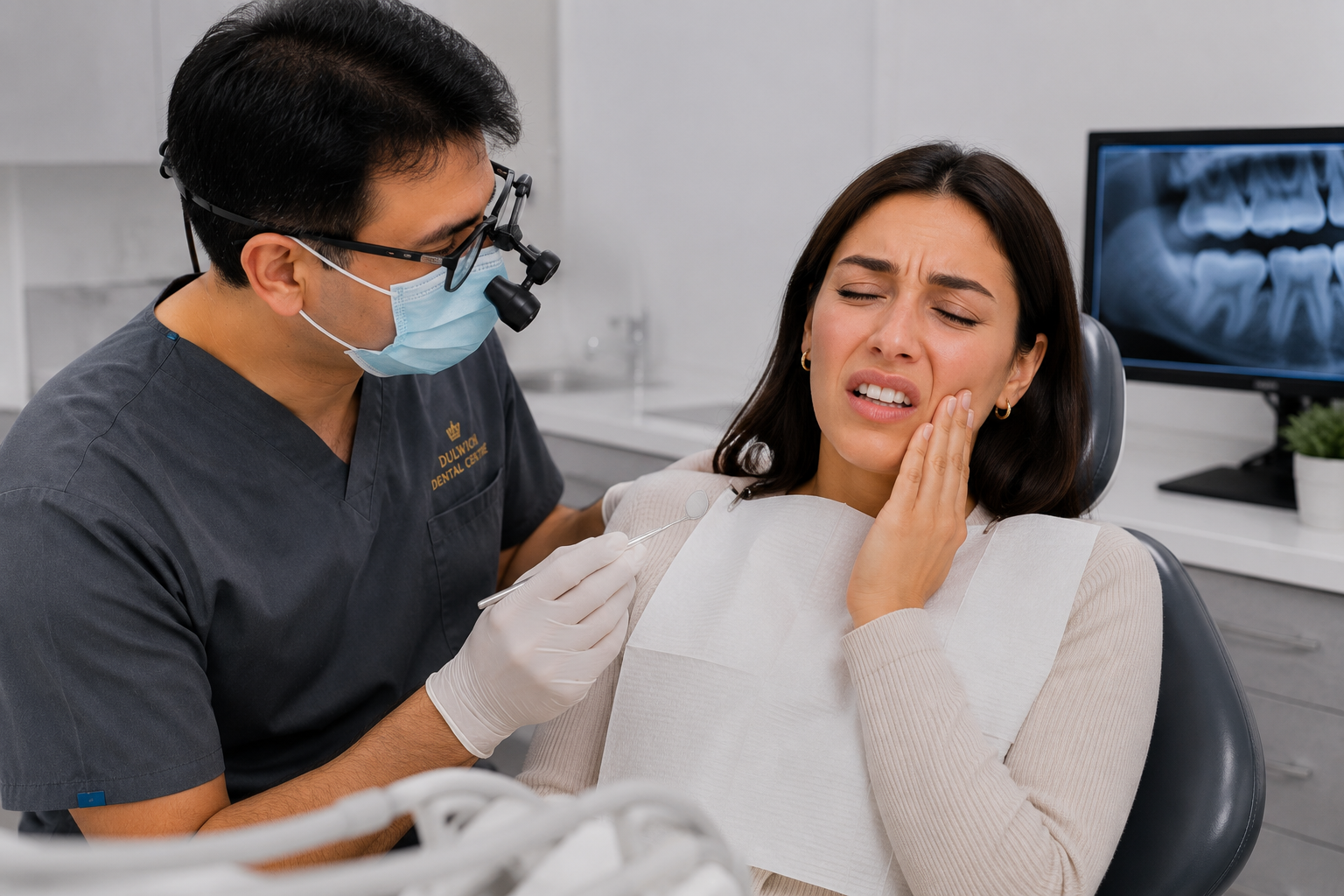
Many toothaches are caused by decay reaching the nerve (pulp). Once the inflamed pulp is under pressure, pain can become intense and difficult to ignore.
During your emergency appointment we will:
If the nerve is inflamed beyond recovery, we may perform an emergency pulpotomy to remove the inflamed pulp and settle the pain, before completing root canal treatment at a follow-up appointment.
Teeth commonly fracture because of:
Treatment depends on how the tooth has broken. Some fractures can be neatly repaired with a filling, while deeper or more extensive breaks may need an onlay or crown to protect the remaining tooth.
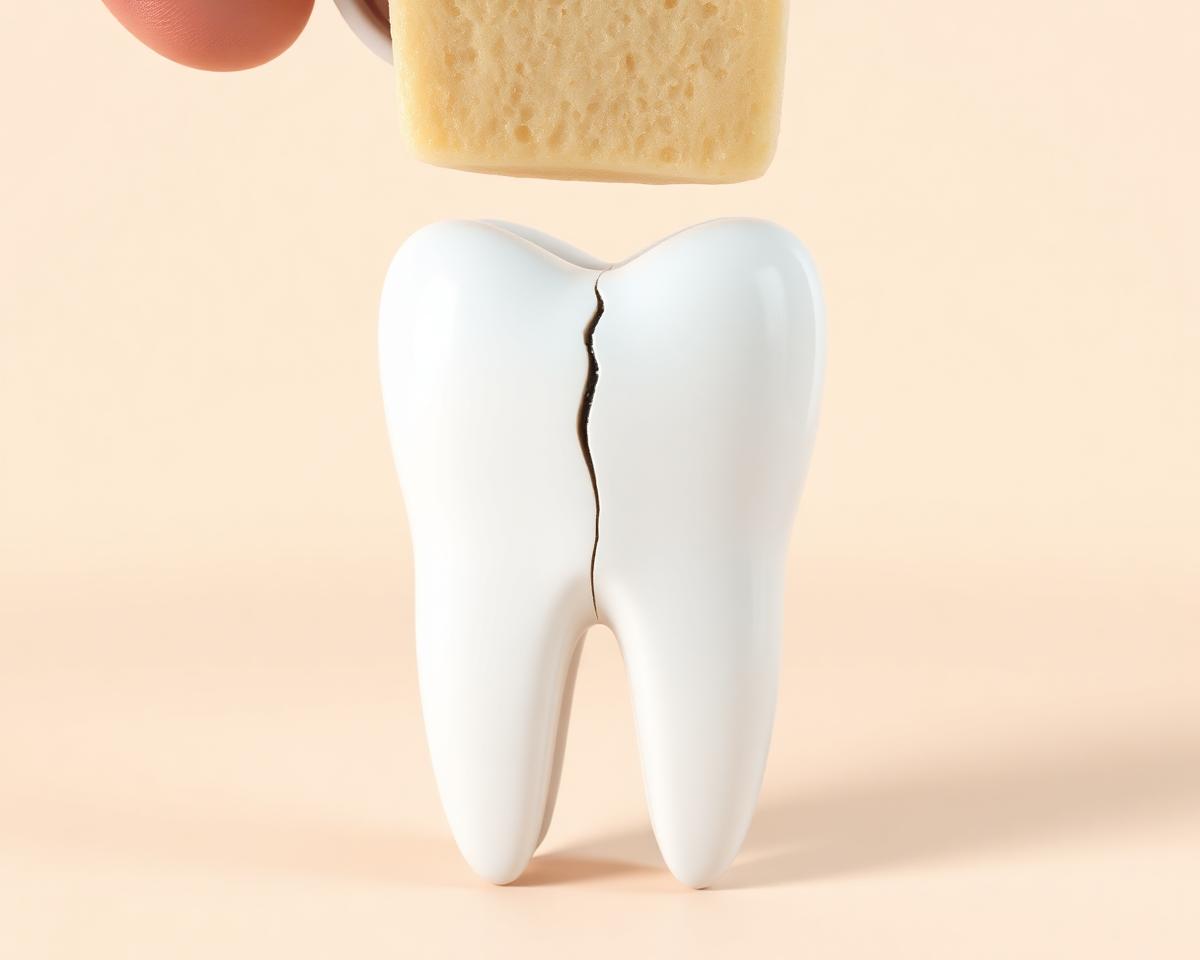
Cracked tooth syndrome typically causes sharp, unpredictable pain when biting down on food — and again when the pressure is released. Cracks are often microscopic and may not show up on X-rays.
Treatment depends on how deep the crack extends into the tooth. Early diagnosis significantly improves the chance of saving the tooth, so it is important to be seen quickly if you notice this kind of pain.
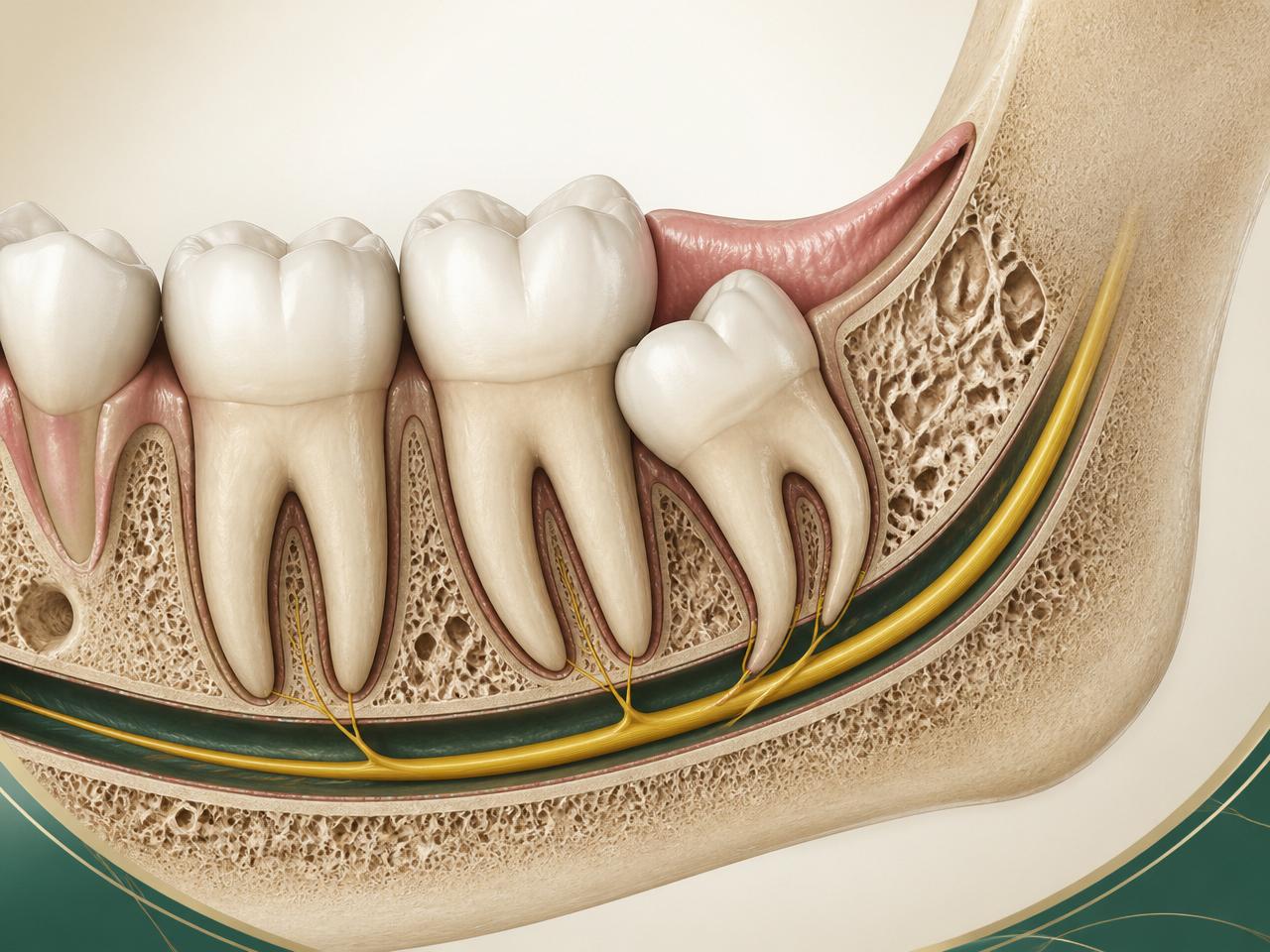
Food and bacteria can become trapped beneath the gum flap around a partially erupted wisdom tooth. This causes inflammation and pain known as pericoronitis.
Treatment may include:
If infections keep coming back, we may recommend wisdom tooth extraction as a longer-term solution.

Dental infections should always be assessed promptly. Treatment depends on the source of the infection, and we aim to remove the cause whenever possible — not just mask the symptoms.
Antibiotics alone rarely cure a dental infection without also treating the affected tooth. That is why a proper emergency examination — including X-rays where needed — is so important.
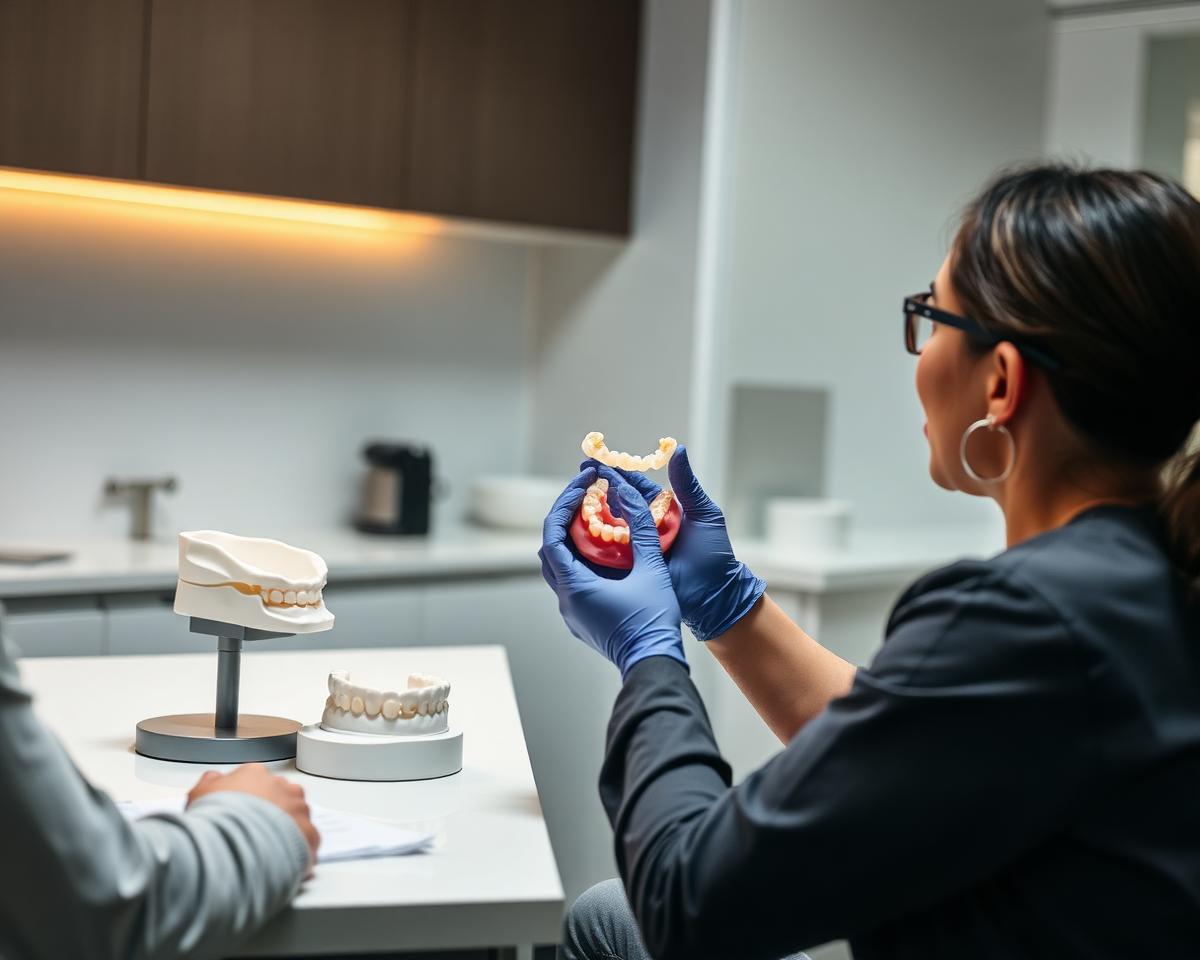
Broken dentures can usually be repaired quickly. Where possible, we arrange same-day laboratory repair so you are not without your denture for long.
Please do not attempt to fix a denture with household glue — this can distort the fit and make a professional repair much more difficult.

Sudden or severe sensitivity can be caused by:
Treatment always starts with identifying the underlying cause, then addressing it with the most conservative option that will settle your symptoms and protect the tooth long-term.
Your Appointment
A calm, structured process — designed to relieve pain quickly, understand the cause and plan the right treatment for you.
We review your medical history and listen carefully to your symptoms so nothing is missed.

Where needed, digital X-rays allow us to see what is happening beneath the surface of the tooth.
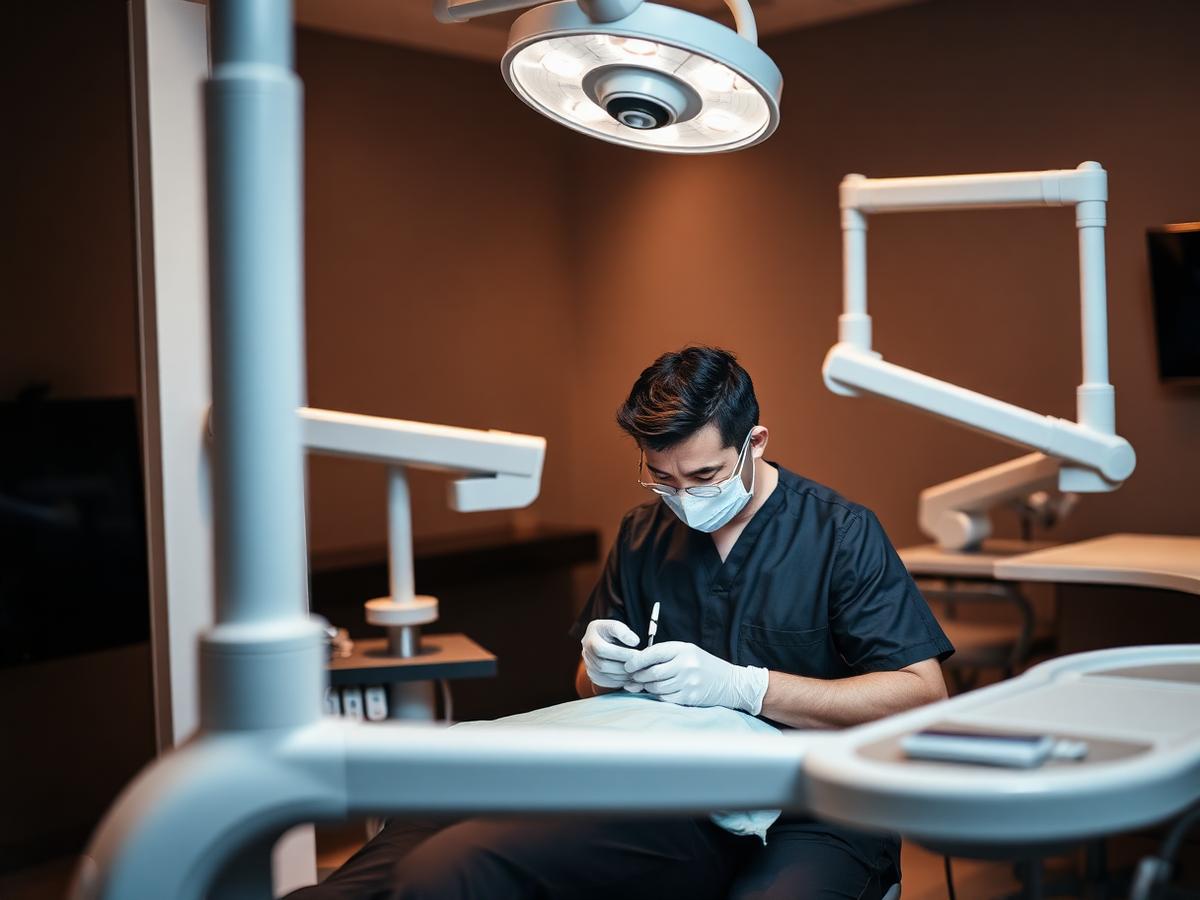
A thorough clinical examination to reach a clear diagnosis of the cause of your pain or problem.

Pain relief plus temporary or definitive treatment — whatever is safest and most appropriate today.

We explain what has happened, what has been done today, and any further appointments needed.
FAQ
Answers to the questions our emergency patients most often ask us.
Wherever possible, yes. We keep emergency slots reserved throughout the day for patients in pain. Please call us as early as you can so we can prioritise your appointment.
Not usually. Our first priority is to relieve your pain and understand the cause. Extraction is only recommended when a tooth genuinely cannot be saved — and only after a full discussion with you.
Antibiotics are only prescribed when clinically indicated, such as when infection is spreading. In most cases, treating the underlying tooth is what resolves the problem — not antibiotics alone.
Yes. If a tooth requires root canal treatment we can either begin the procedure at your emergency visit to relieve pain, or plan a dedicated appointment to complete it comfortably.
Keep the crown safe and clean, and call us. In many cases a crown can be gently re-cemented at your emergency appointment provided the underlying tooth is healthy.
A lost filling is usually not painful at first, but the tooth can quickly become sensitive or break further. We can place a temporary or definitive filling to protect the tooth.
Yes — facial swelling should always be assessed as soon as possible. If swelling affects your breathing, swallowing or vision, please treat it as a medical emergency and attend A&E immediately.
Emergency appointments are charged as an assessment fee, with any treatment carried out on the day quoted before we proceed. Please see our fees page or ask our reception team when you call.
Here to Help
We are here to help relieve your pain as quickly as possible. Call now and our team will do everything they can to see you today.