
White Composite Fillings in East Dulwich
Restore damaged or decayed teeth with natural-looking composite fillings that blend beautifully with your smile — expertly placed at Dulwich Dental Centre.

Restorative Dentistry
What is a dental filling?
A dental filling is used to repair a tooth that has been damaged by decay, fracture or wear. The damaged portion of the tooth is carefully removed and replaced with a restorative material to restore strength, function and appearance.
Modern composite fillings match the natural colour of your teeth and allow us to restore teeth with minimal removal of healthy tooth structure — a conservative, aesthetic approach used throughout our East Dulwich practice.
Common Reasons
Why might a tooth need a filling?
A filling helps restore a tooth before small problems become larger, more complex treatments.
Tooth Decay (Cavities)
Bacteria and acids create cavities in the enamel and dentine that need cleaning and restoring.
Broken Tooth
Sudden fracture from biting on something hard can leave sharp edges that need restoring.
Chipped Tooth
Small chips at the edge of a tooth can be smoothly restored with composite bonding.
Worn Teeth
Everyday wear can shorten and flatten teeth — composite rebuilds height and contour.
Old Leaking Fillings
Aged fillings can develop tiny gaps that let bacteria in — replacement prevents new decay.
Cracked Fillings
A cracked restoration weakens the tooth and should be replaced before it fails completely.
Grinding & Tooth Wear
Habitual grinding wears down enamel — composite restores lost tooth surface and function.
Materials Compared
Composite Filling vs Amalgam Filling
Both materials restore teeth — but modern composite offers clear advantages in appearance and preservation of natural tooth structure.
| Composite Fillings | Amalgam Fillings | |
|---|---|---|
| Appearance | Tooth-coloured — virtually invisible | Silver / grey — clearly visible |
| Aesthetics | Excellent, natural-looking | More noticeable, particularly on smiling |
| Bond to tooth | Bonds directly to enamel and dentine | Does not bond — held in place mechanically |
| Tooth preservation | Preserves more healthy tooth structure | Usually requires removal of more tooth tissue |
| Best suited to | Front and back teeth, small to moderate cavities | Mainly older restorations |
At Dulwich Dental Centre we primarily provide modern tooth-coloured composite restorations — they offer excellent aesthetics while preserving as much of your natural tooth as possible.
The Procedure
How composite fillings are placed
A calm, precise five-step process to restore your tooth beautifully and comfortably.

Step 01
Examination & Diagnosis
Your appointment begins with a careful assessment so we understand exactly what your tooth needs before any treatment begins.
- Thorough clinical examination
- Digital X-rays when required
- Clear diagnosis of decay or damage
- Personalised treatment plan
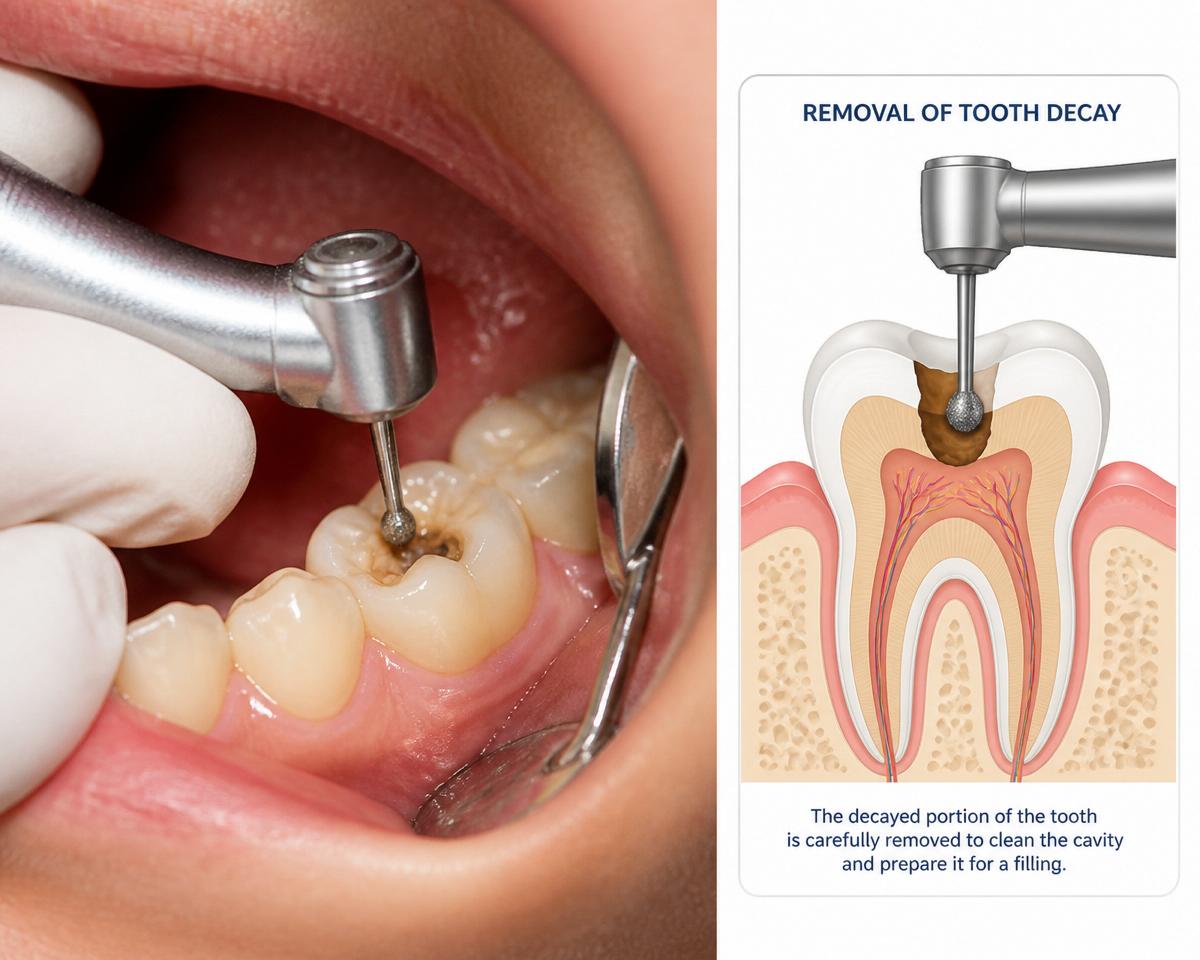
Step 02
Removing Tooth Decay
Local anaesthetic keeps you comfortable while the decay is gently removed. We take a minimally invasive approach — preserving as much healthy tooth as possible so your restoration is stronger and longer lasting.
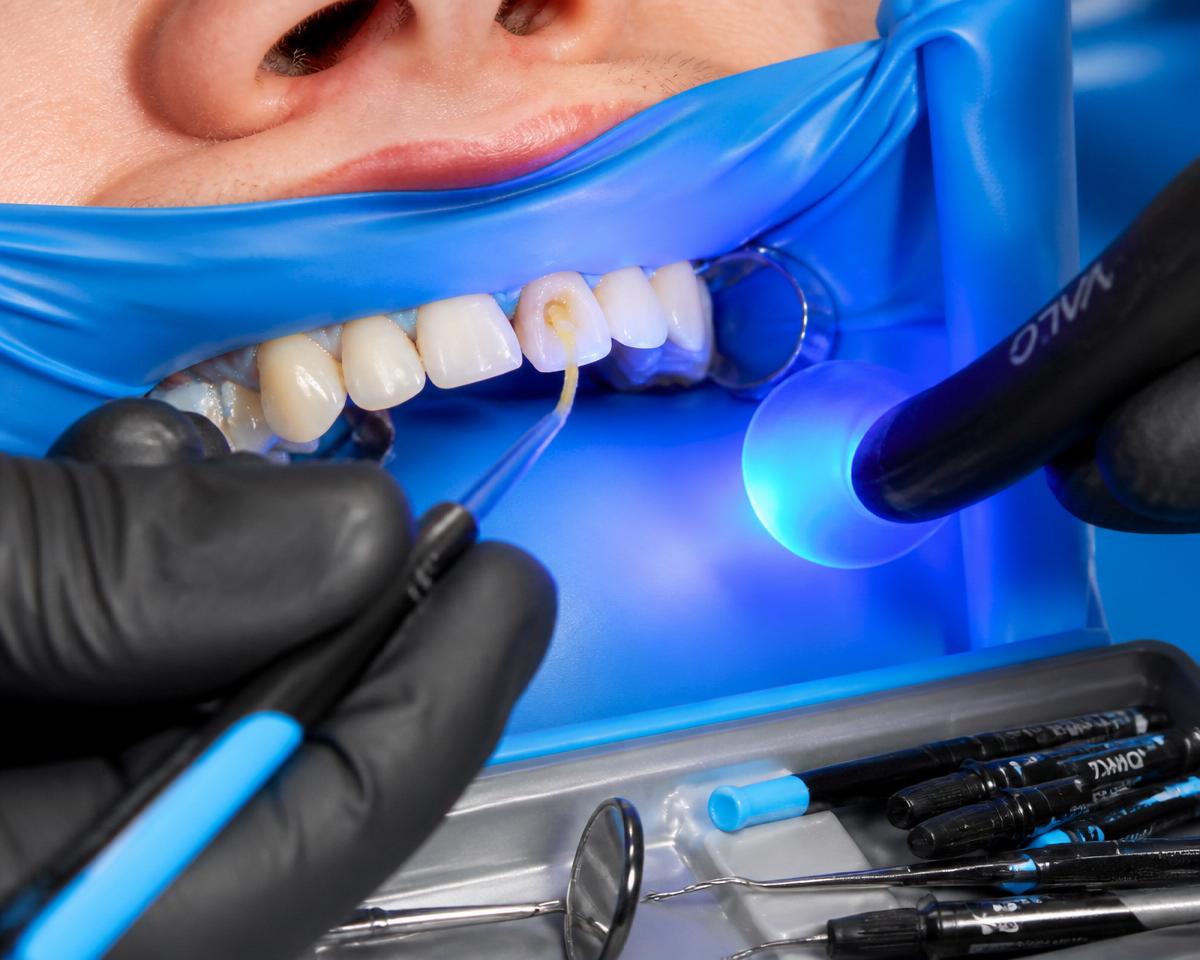
Step 03
Bonding the Tooth
The prepared tooth is cleaned, conditioned and coated with a modern dental adhesive.
- Careful preparation of the tooth surface
- Conditioning gel to open the enamel
- Bonding agent for a strong, sealed bond
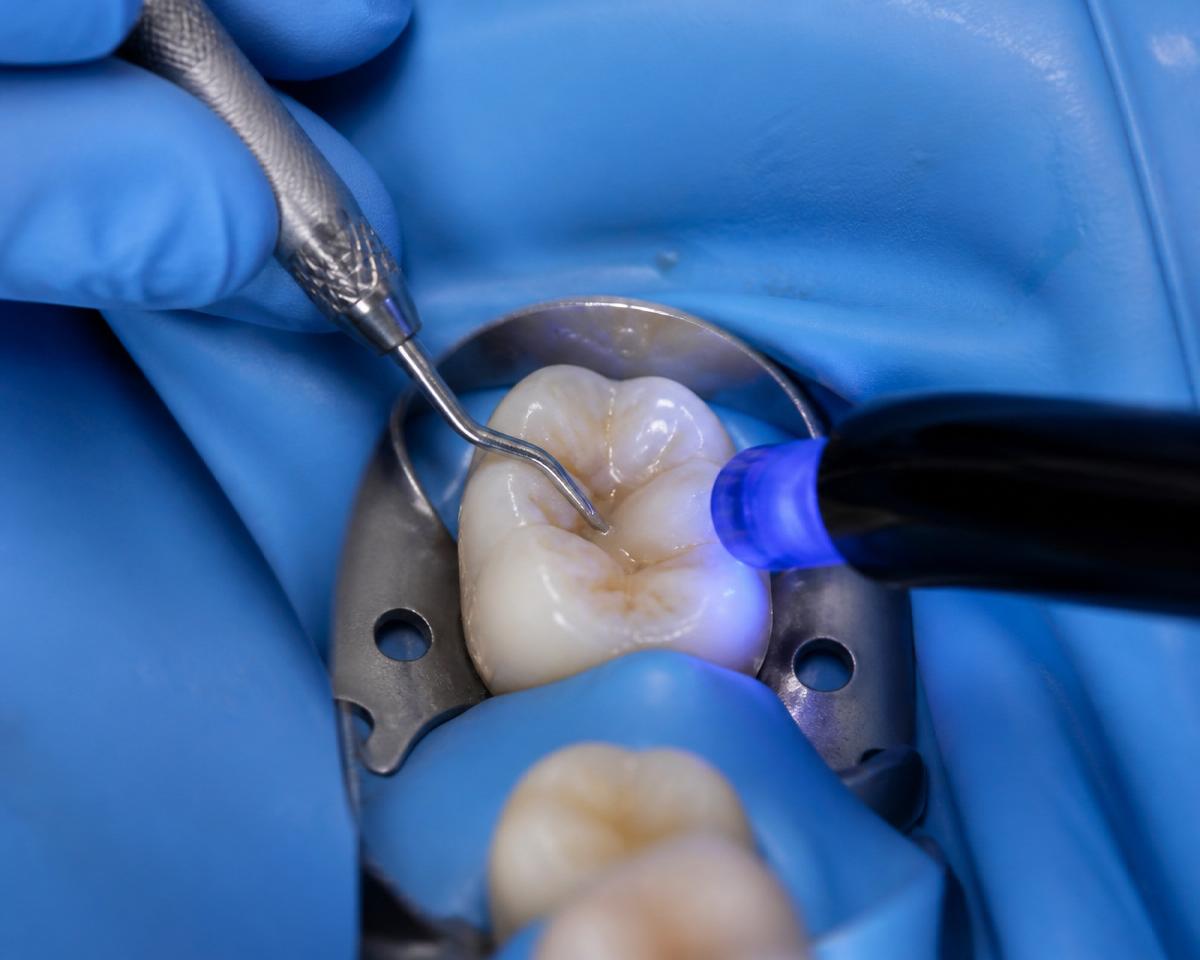
Step 04
Placing the Composite Filling
Composite is placed in fine, incremental layers — each one hardened with a curing light. This layered technique creates a strong, durable and beautifully sculpted restoration that behaves like natural tooth structure.

Step 05
Shaping & Polishing
The finished filling is carefully adjusted to your bite and polished to a natural, high lustre — so it feels smooth, functions perfectly and blends seamlessly with your surrounding teeth.
After Your Filling
Why might a tooth hurt after a filling?
Some sensitivity after a filling is normal. Here’s what it usually means — and when to give us a call.
Deep Decay
If decay was close to the nerve, the pulp inside your tooth may remain inflamed for several days or weeks before settling. This gradual improvement is a positive sign.
A Slightly High Filling
If the filling sits a fraction too high, biting can feel uncomfortable. A quick adjustment at a short follow-up appointment usually resolves this immediately.
Temporary Sensitivity
Cold or sweet sensitivity is common after deeper fillings and typically eases over days to weeks as the tooth recovers.
Nerve Damage
Occasionally the nerve cannot recover because the decay was too deep. If pain becomes severe, spontaneous or persistent, root canal treatment may be required to save the tooth.
Please contact us if any discomfort worsens, wakes you at night, or lasts longer than a few weeks — we’ll always review the tooth and reassure you.
Everyday Care
Looking after your filling
Daily Habits
- Brush twice daily with a fluoride toothpaste
- Clean between your teeth every day
- Reduce sugary snacks and drinks
Professional Care
- Attend regular dental examinations
- Book regular hygiene appointments
- Replace damaged fillings before larger problems develop
Prevention
Preventing tooth decay
The best filling is the one you never need. A few consistent habits go a long way.
Effective Brushing
Brush twice daily for two minutes with a soft brush — angled gently along the gum line.
Fluoride Toothpaste
Use a fluoride toothpaste that strengthens enamel and helps protect against acid attack.
Clean Between Teeth
Floss or use interdental brushes daily — cavities often start where a brush can’t reach.
Limit Sugar
Reduce sugary foods and drinks, and try to keep sweet treats to mealtimes only.
Regular Hygiene Visits
Professional cleaning removes hardened tartar that home care cannot, keeping decay at bay.
Regular Check-Ups
Six-monthly examinations catch problems early — when repairs are simplest and least invasive.
Common Questions
Frequently Asked Questions
Are white fillings strong?
Yes. Modern composite materials are highly durable and bond directly to the tooth, making them well suited to both front and back teeth in the majority of cases.
How long do composite fillings last?
Most composite fillings last many years with good oral hygiene and regular check-ups. Lifespan depends on the size of the restoration, biting forces and daily care.
Will the filling match my tooth?
Yes — composite is available in a wide range of shades, and we colour-match carefully so your restoration blends invisibly with your natural tooth.
Can fillings fall out?
Rarely. A well-bonded composite is very secure. If a filling ever feels loose or comes out, please contact us so we can review and repair it promptly.
Can fillings stain?
Composite can gradually pick up light staining from tea, coffee, red wine and smoking over time. Polishing at your hygiene visits usually restores its natural appearance.
Why does my tooth hurt after treatment?
Mild sensitivity for a few days — especially after deep fillings — is normal. Please contact us if pain worsens, becomes spontaneous or persists.
Can I eat immediately after a composite filling?
Yes — composite is fully set before you leave. If we have used local anaesthetic, wait until the numbness has worn off to avoid accidentally biting your cheek or tongue.
When should I contact the dentist after a filling?
Get in touch if you notice sharp edges, an uneven bite, worsening pain, prolonged sensitivity, or if a filling chips or comes out.
Private Dentist in East Dulwich
Protect your smile with modern composite fillings
Treat tooth decay early — before it becomes a larger, more complex problem. Our team is here to restore your tooth with skill, precision and care.